The Club Car Architecture: Aluminum Frames and Model Lineages
Club Car holds a unique place in the utility vehicle world primarily because of its rustproof AlumiCore frame. While competing brands traditionally rely on welded steel chassis that eventually corrode when exposed to battery acid wash or humid coastal air, Club Car vehicles feature an aircraft-grade aluminum ladder chassis. That structural foundation is the chief reason decades-old carts remain mechanically viable platforms for rebuilding, commercial work, and recreational cruising around residential neighborhoods.
To navigate the market effectively, you must recognize the primary model generations. The Club Car DS, produced from the early 1980s until the mid-2000s, features square body styling and modular fiberglass or ArmorFlex panels. In 2004, the brand introduced the Precedent, introducing an automotive-style composite underbody, rounded fenders, and improved steering geometry. Modern iterations like the Tempo and Onward build directly on the Precedent platform, sharing identical wheelbase measurements and interchangeable front suspension geometries.
Choosing between an older DS and a newer Precedent chassis typically comes down to how you plan to use the vehicle. The DS is beloved by garage tinkerers because mechanical components, wiring harness paths, and battery trays are fully exposed and straightforward to fabricate. The Precedent offers superior passenger ergonomics, modern cup holders, integrated sweater baskets, and a much smoother double A-arm front suspension, making it the preferred starting point for family cruising.
Navigating Dealerships, Auctions, and Private Sales
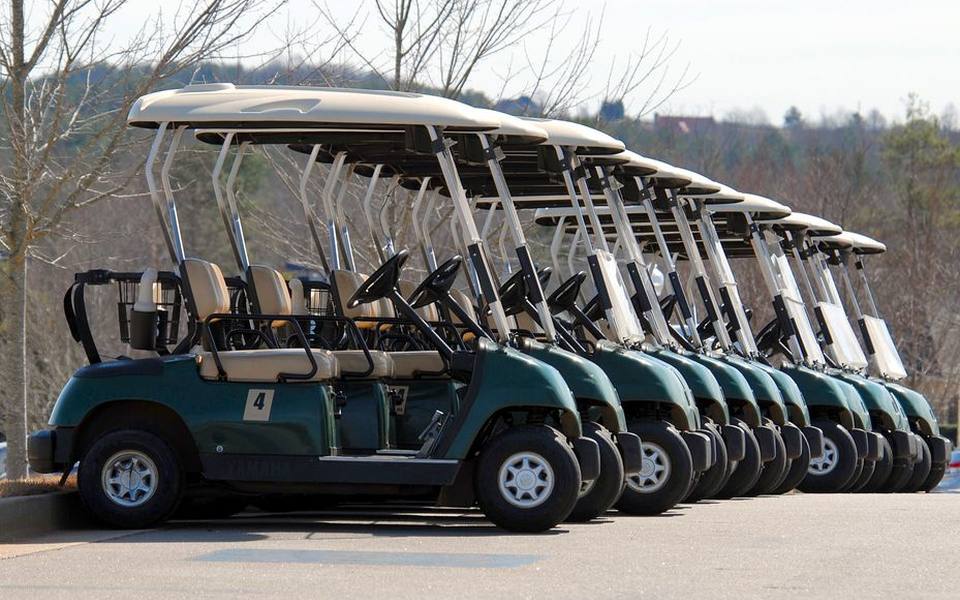
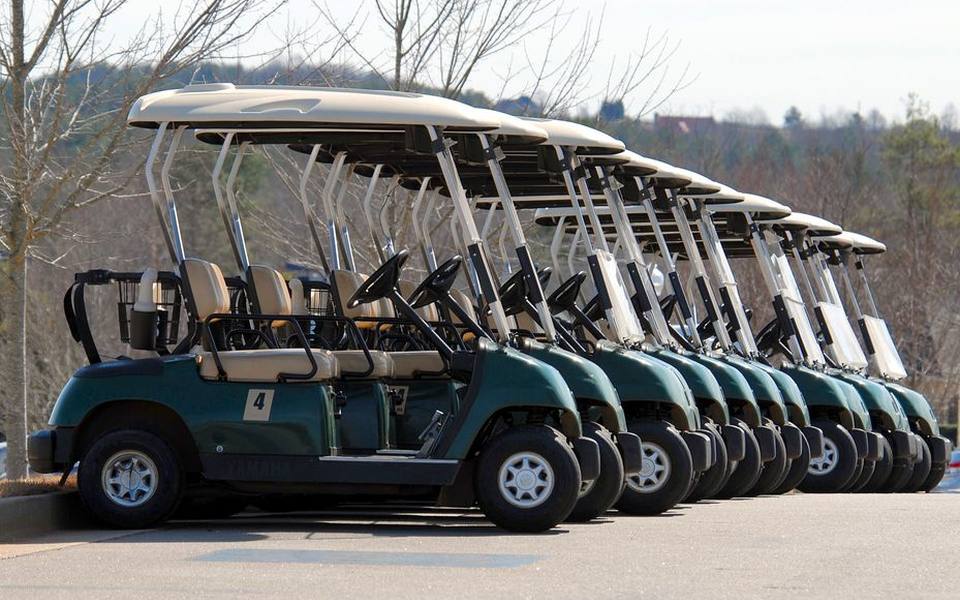
Sourcing a cart requires understanding where inventory originates. Dealerships typically stock three distinct tiers: factory-fresh models, off-lease fleet returns, and refurbished trade-ins. Country clubs usually turn over entire fleets every three to five years under commercial lease contracts. Commercial wholesalers buy these large batches at auction, replacing heavily worn tires or cracked cowls before reselling them to local specialty dealerships and independent repair shops.
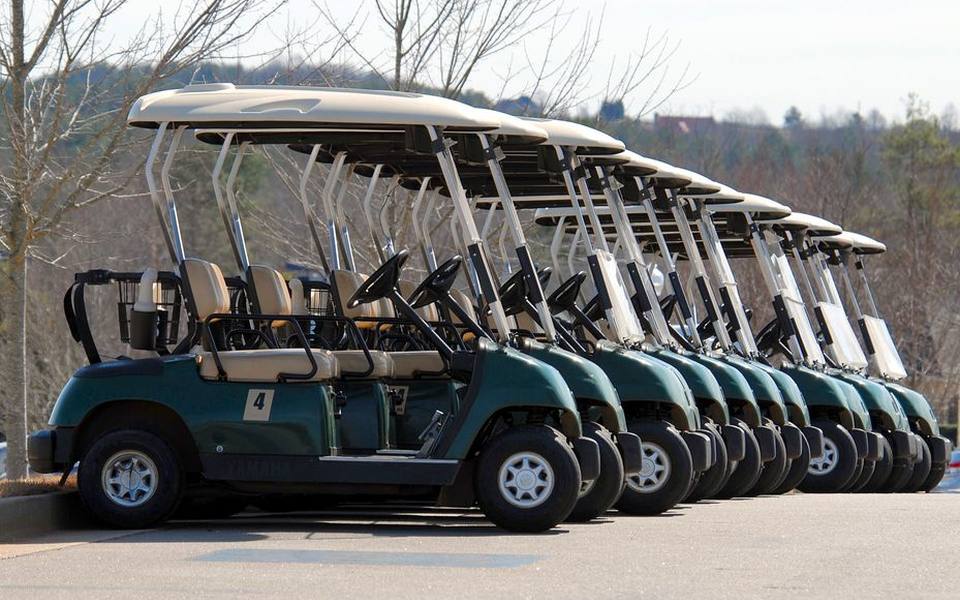
Private party sellers provide another direct route, often listing carts that have spent years parked inside retirement community garages or suburban sheds. When dealing with private sellers, maintenance records tell the real story. An unwashed cart with verifiable service logs detailing battery maintenance and annual grease point lubrication is usually a safer buy than a freshly painted cart whose electrical history remains completely unknown.
Seasonal pricing fluctuations play a significant role in market dynamics across different regions. In northern states, inventory swells in autumn as golf courses close their fairways and homeowners empty their garages before winter sets in. Conversely, across golf-dense regions like driving ranges in Florida, demand stays steady year-round, keeping resale values elevated across both commercial dealerships and private classified listings.
Evaluating Used Carts: Essential Pre-Purchase Checklist
Every thorough cart inspection begins with decoding the serial number plaque. On the DS, you will find this metal plate under the passenger-side glove box, while on Precedent models, it sits on a sticker tucked behind the right kick panel. The first two letters indicate the model and powertrain code, followed by two digits representing the year of manufacture. Verifying the year on the frame is critical, as dishonest sellers sometimes install modern front cowls to pass off older carts as recent models.
Once you confirm the true model year, direct your attention straight to the structural frame underneath. While aluminum does not rust, it can crack under stress, especially around the front suspension mounting plates and rear shock perches. Inspect the battery tray closely for structural bending or white powdery oxidation caused by boiled electrolyte spills. A battery tray that has sagged downward into the center differential indicates years of neglected battery boil-over and heavy overload.
Do not overlook mechanical wear points along the steering rack and Kingpin assemblies. Jack up the front end slightly and grab the front tires at the twelve and six o'clock positions, rocking them back and forth. Any noticeable clicking or vertical movement reveals worn bronze bushings or loose wheel bearings. Replacing front-end bushings is an inexpensive weekend job, but severe play can point to wider suspension abuse from off-road trails or heavy utility hauling.
Electric Powertrains: Lead-Acid Varieties Versus Lithium Conversion
Club Car electric models run on either 36-volt or 48-volt systems, with modern platforms exclusively utilizing 48 volts for improved efficiency and uphill torque. Traditional flooded lead-acid batteries remain common due to their lower initial replacement cost. However, they demand strict discipline: routine water replenishment with distilled water, post-charge balancing, terminal corrosion cleaning, and sensible off-season trickle charging to prevent sulfation and premature pack failure.
Sealed AGM (Absorbent Glass Mat) batteries eliminate the hassle of acid watering and boil-over, but they remain sensitive to overcharging and deliver a shorter operating lifespan per dollar spent. For serious users, drop-in lithium iron phosphate (LiFePO4) conversion kits have transformed the ownership experience. A lithium pack eliminates roughly three hundred pounds of dead weight from the center of the frame, delivering noticeably quicker throttle response and consistent power output.
Upgrading to lithium also eliminates the dreaded voltage sag experienced on steep inclines near the end of a driving day. While a quality lithium conversion kit represents a substantial initial investment, it typically outlasts two full sets of traditional lead-acid batteries. Many owners who regularly drive from home to local public driving ranges find that the zero-maintenance reliability and rapid charge recovery easily justify the higher upfront expense.
The Gas Engine Alternative: Kawasaki and Kohler Powertrains
For owners operating on large rural acreage, hunting leases, or facilities lacking convenient electrical outlets, gas-powered Club Cars remain highly sought after. Older DS models feature the legendary Kawasaki single-cylinder engines, notably the flat-head FE290 and overhead-valve FE350. These industrial-grade powerplants are renowned for their bulletproof reliability, running for decades with little more than annual oil changes, fresh spark plugs, and occasional valve lash adjustments.
In 2014, Club Car transitioned modern production to electronic fuel injection (EFI) engines, primarily supplied by Subaru and later Kohler. The EFI systems eliminated manual choke cables and stubborn cold-morning starts, offering crisp throttle delivery and superior fuel economy. However, servicing an EFI cart requires diagnostic scanner tools and clean fuel storage, whereas the older carbureted Kawasaki engines can be completely cleaned and rebuilt on a standard workbench with basic hand tools.
When inspecting a gas model, look for signs of oil leaks around the crankcase seals and drive clutch shaft. Start the engine from a dead cold stop and listen closely for excessive clatter from worn rocker arms or piston slap. Observe how smoothly the primary and secondary drive clutches engage; sticky clutch weights or grooved sheaves will cause the cart to jerk violently forward rather than rolling away smoothly.
Building a Custom Cart from the Bare Chassis Up
Transforming a tired fleet vehicle into a personalized neighborhood cruiser is one of the most rewarding mechanical projects you can tackle. The process starts by stripping the donor cart down to its bare frame, allowing you to thoroughly degrease the aluminum rails and wash out years of collected road grime. Just as golfers evaluate their physical swing dynamics with professional club fitting, a cart builder must measure the chassis carefully before ordering lift kits, tire packages, and custom seating.
Choosing a suspension setup determines how the vehicle handles on asphalt versus uneven turf. Spindle lift kits provide an affordable way to clear larger tires, but they widen the front track slightly and can introduce unwanted bump steer at higher speeds. Double A-arm or long-travel suspension kits cost significantly more, but they replace the rigid factory leaf springs with adjustable coil-over shocks, transforming ride quality and maintaining precise wheel alignment.
Wheel and tire selection directly affects both braking performance and final drive ratios. Installing 22-inch or 23-inch all-terrain tires increases top speed on flat pavement due to the larger rolling circumference, but it reduces climbing torque noticeably. If you run taller tires on an electric cart, you must ensure the motor and speed controller can handle the increased electrical load without overheating during extended climbs.
Electrical Upgrades: Speed Controllers, Solenoids, and Motors
Standard fleet carts are electronically speed-governed to roughly twelve to fourteen miles per hour for safety reasons on golf courses. Unlocking greater speed and hill-climbing power on an electric Club Car requires upgrading three interconnected components: the motor controller, the heavy-duty solenoid, and the main battery cables. Upgrading only one component creates an electrical bottleneck that quickly leads to premature heat failure.
Factory Curtis controllers deliver modest amperage suited for gentle terrain and stock tire sizes. Installing a programmable aftermarket controller, such as units from Navitas or Alltrax, allows you to increase continuous current flow to the motor while customizing acceleration curves, top speeds, and regenerative braking force. These controllers connect directly to smartphone apps via Bluetooth, letting owners dial in conservative speeds for young drivers or maximum torque for hauling heavy trailers.
Upgraded controllers draw significantly more current, meaning factory six-gauge wiring will overheat and melt its insulation under sustained heavy throttle. Installing high-strand four-gauge or two-gauge welding cable throughout the battery pack and motor loop is mandatory. Pair these heavy cables with a heavy-duty four-hundred-amp solenoid equipped with pre-charge resistors to prevent contact welding and protect your expensive controller investment.
Street-Legal Conversions and Neighborhood Compliance
Driving a cart on public streets requires meeting specific legal designations, most commonly defined under federal and state statutes as a Low-Speed Vehicle (LSV). Standard golf carts lack the safety hardware required to mix with full-sized automotive traffic. While requirements vary by municipality, building a street-compliant machine generally means adding a DOT-approved folding acrylic windshield, three-point seatbelts, side mirrors, a horn, and a complete lighting package.
Automotive-style lighting goes far beyond basic headlights. A street-legal package includes self-canceling turn signals, hazards, brake lights, and rear license plate illumination. To power these accessories on a 48-volt cart, always install a dedicated 48-volt to 12-volt voltage reducer. Tapping directly into one or two batteries in the series to draw twelve volts causes an uneven drain, unbalancing the pack and drastically shortening battery lifespan.
Before investing in street accessories, study your municipal ordinances carefully. In master-planned communities across driving ranges in California and sunbelt states, carts may operate legally on roads with posted speed limits of twenty-five or thirty-five miles per hour. However, many towns require formal safety inspections, municipal permits, local registration decals, and proof of active liability insurance before you can touch public asphalt.
Mechanical Testing: Steering, Brakes, and Rear Transaxle
A proper test drive reveals mechanical issues that visual inspections routinely miss. Begin by testing the mechanical braking system on dry pavement. Club Cars utilize self-adjusting rear drum brakes operated by steel pull cables. Accelerate to top speed and press the brake pedal firmly; the cart should stop in a straight line without pulling sharply to either side or vibrating through the floorboard.
Listen carefully to the rear transaxle during both hard acceleration and coasting down hills. A high-pitched whining sound from the rear differential typically indicates worn input shaft bearings or degraded gear oil. Transaxle oil is frequently neglected by previous owners because there is no factory dipstick, but changing the gear lubricant using high-grade synthetic oil often quietens minor gear noise and reduces internal operating friction.
Pay close attention to how the pedal linkage feels under your right foot. Club Car uses a continuous-pedal throttle assembly connected to a potentiometer or MCOR (Motor Controller Output Regulator) mounted under the floorboard. If the cart hesitates, jerks unpredictably off the line, or fails to accelerate when the pedal is depressed halfway, the internal carbon tracks of the MCOR are failing and require replacement.
Ownership Economics, Storage, and Long-Term Value
From a purely financial standpoint, Club Car vehicles exhibit remarkably slow depreciation compared to ordinary utility vehicles. Thanks to the durable aluminum frame, a well-maintained ten-year-old cart often sells for nearly the same amount as a five-year-old model, provided the battery pack is fresh. The largest recurring expense over a decade of ownership will almost certainly be battery maintenance and eventual pack replacement.
Proper seasonal storage preserves your investment when the cart sits unused for months. For electric carts, fully charge the pack, disconnect the main positive and negative cables or toggle the tow-run switch to the 'tow' position, and store the vehicle in a dry space away from freezing drafts. Lead-acid batteries self-discharge over time; leaving a smart maintainer connected prevents the electrolyte from freezing and cracking the plastic cases.
Gas carts require standard small-engine winterization practices. Drain the carburetor bowl or add an enzymatic fuel stabilizer to a fresh tank of non-ethanol fuel, running the engine for ten minutes to circulate treated fuel through the jets. Spraying fogging oil into the spark plug cylinder and disconnecting the starter battery prevents corrosion, ensuring the vehicle fires up effortlessly when warm weather returns.
Published 2026-09-21 · reviewed with each rebuild, last September 2026.
Find driving ranges near you
The directory lists 3,693 driving ranges by state and city — pick your state or use the “Near me” button in the header.
More guides
-
 Buying
Realistic Costs and Equipment Needed for a Home Golf Simulator
-
 Service
Golf Club Maintenance: Regripping and Reshafting Guide
-
 Money
MoneyGolf Lessons Cost and Beginner Guide: What to Expect and How to Budget
-
 Buying
Golf Club Fitting Cost and Selection Guide
-
 Buying
A Practical Guide to Buying, Selling, and Trading In Used Golf Clubs
-
 Money
MoneyDriving Range Costs, Practice Routines, and Range Etiquette
-
 Service
Fixing Topped Shots and Improving Ball Striking on the Range
-
 Buying
Best Golf Launch Monitors Buying Guide: Space, Tech, and Budget
-
 Buying
The Complete Guide to Buying Used Golf Clubs and Pre-Owned Equipment
-
 Buying
How to Choose the Best Local Golf Shop and Pro Shop Services
-
 Owning
Miniature Golf and Putt-Putt Guide: Rules, Courses, and Family Fun
-
 Service
Complete Guide to Custom Golf Fitting and Shaft Selection
-
 Buying
Complete Guide to Buying and Maintaining Golf Shoes and Cleats
-
 Owning
Designing and Installing Indoor and Backyard Putting Greens
-
 Service
Golf Swing Analytics, Speed Training, and Shot Tracking Systems
-
 Buying
Golf Practice Nets, Driving Mats, and Backyard Hitting Setups
-
 Buying
How to Buy Used Golf Clubs and Get the Best Demo Day Deals
-
 Owning
Custom Golf Gear Personalization: Stampers, Bags, and Embroidery
-
 Buying
Selecting and Setting Up Home Golf Simulators and Launch Monitors
-
 Service
Choosing Golf Academies, Lessons, and Coaching Programs
-
 Buying
Custom Golf Club Fitting: Shafts, Clubheads, and Specifications
-
 Service
Entertainment Driving Ranges: Planning Group Outings, Corporate Events, and Bachelor Parties
-
 Service
Mini Golf, Footgolf, and Indoor Golf: Complete Venue Guide and Directory
-
 Owning
Tournaments, Scoring Tech, and Gear Upkeep: The Modern Golfer's Guide
-
 Buying
Golf Equipment and Club Fitting Guide: Starter Sets, Drivers, and Custom Builds
-
 Buying
Finding the Right Golf Pro Shop and Equipment Retailer
-
 Owning
Designing and Hosting Mini Golf Events: Indoor Party Venues and Practice Games
-
 Buying
Indoor Golf Practice and Launch Monitors: How to Build Your Studio
-
 Buying
Golf Laser Rangefinders Buyer's Guide: Features, Accuracy, and Value
-
 Owning
Golf Club Groove Maintenance: Tools, Techniques, and Equipment Care
-
 Buying
Commercial Golf Green Mowers: Maintenance, Selection, and Buying Guide
-
 Owning
Best Mobile Golf Simulators and Games for Practice and Play
-
 Owning
Fixing Heavy Contact, Managing Distance, and Choosing Cold-Weather Gear
-
 Owning
Complete Guide to Putt-Putt Games: History, Titles, Platforms, and Walkthroughs
-
 Service
Top Sports Bars and Lounges: How to Pick the Best Game-Day Spots in NYC and Florida
-
 Safety
24-Hour Gun and Shooting Ranges: Availability, Rules, and Finding Round-the-Clock Facilities
-
 Owning
Golf Green Mobile Estates: Guide to Golf Community Living and Amenities