What a Professional Club Fitting Typically Costs
A professional golf club fitting typically costs between $75 and $150 for an individual club category like a driver, putter, or wedge set, while a comprehensive full-bag fitting usually ranges from $250 to $450. High-end boutique studios that specialize in exotic shaft pairings and precision component blueprinting may charge upwards of $500 for an extensive multi-hour evaluation. The total price you pay depends largely on whether you visit a national sporting goods retailer, an independent master club builder, or a green-grass facility at a golf course.
Many retail facilities and commercial golf stores offer a fee waiver or store credit structure. In most shops with this policy, your fitting fee is completely refunded or credited toward the purchase price if you buy custom-ordered clubs directly through their counter above a specific dollar threshold. Conversely, top-tier independent fitters often unbundle their diagnostic services from club manufacturing, charging a flat non-refundable fee for their time, launch monitor technology, and data reporting regardless of whether you order hardware through them.
Session duration also influences the overall rate. A focused driver or iron fitting generally lasts between 45 and 60 minutes, giving the fitter sufficient time to test multiple head-and-shaft combinations without inducing physical fatigue. A full-bag appointment typically spans two to three hours. Understanding what is included in that price—such as launch monitor printouts, follow-up loft and lie checks, and build spec sheets—ensures you extract maximum long-term value from your equipment investment.
Big-Box Retailers Versus Independent Fitting Studios
When exploring club fitting options, golfers generally encounter two primary business models: large commercial sporting retail chains and independent custom build studios. Major retail chains typically charge modest fitting fees, often between $50 and $100 per category, and frequently waive that cost entirely if you purchase your clubs that day. These sessions take place in retail simulator bays using standard interchangeable components provided directly by major equipment manufacturers.
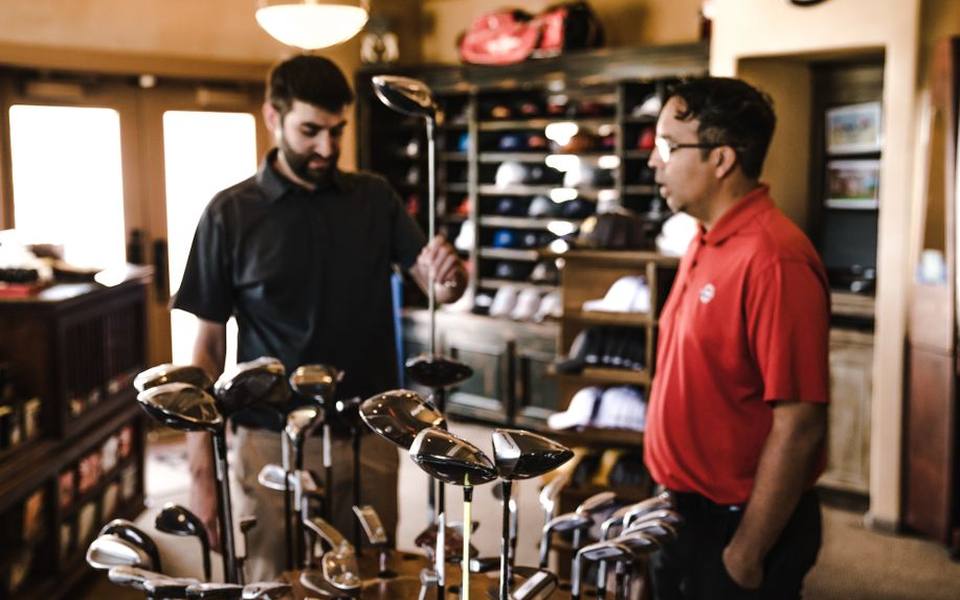
Independent custom fitting studios operate on a different tier of service and pricing. These facilities are staffed by certified master fitters who maintain extensive matrix walls with hundreds of aftermarket shafts, head weights, and specialized components that rarely appear in traditional retail outlets. Fittings at independent studios typically run between $150 and $400 because the business focuses strictly on precision diagnostics, custom assembly tolerances, and neutral advice rather than moving off-the-rack boxed inventory.
Deciding which environment suits your needs depends heavily on your budget, swing speed, and personal goals. If you simply need to verify whether standard length, standard lie, and an off-the-shelf stiff or regular shaft match your swing, a commercial retail fitting is both accessible and cost-effective. If you have unique physical dimensions, high swing speeds, or recurring dispersion issues that require tight blueprinting, an independent boutique studio is well worth the extra investment.
Club Fitting for Beginners and High-Handicap Players
A widespread misconception among newer golfers is that professional club fitting is reserved exclusively for low handicappers and tournament players. In truth, beginners often experience the most dramatic improvements from properly fitted gear because ill-fitting equipment forces unnatural swing compensations. When a novice attempts to swing a club that is too heavy, too stiff, or improperly weighted, they inevitably develop awkward scooping or slicing habits just to get the golf ball airborne.
For higher-handicap golfers, the fitting process focuses on building confidence and establishing functional baseline specifications rather than chasing incremental yardage gains. Identifying the correct shaft weight, shaft flex, and grip size allows a developing player to swing naturally without fighting the clubhead. Many golfers discover that combining professional club fitting services with sound swing fundamentals creates a smoother, faster learning curve than persevering with random hand-me-down clubs.
Beginners should bear in mind that swing mechanics can change rapidly during the first season of dedicated play. Spending thousands of dollars on exotic aftermarket shafts early on is rarely necessary. Instead, scheduling a baseline fitting that pairs your natural tempo and physical dimensions with forgiving, high-launch game-improvement iron heads will deliver immediate consistency without draining your wallet before your swing stabilizes.
Static Versus Dynamic Fitting Explained
A comprehensive equipment fitting relies on two distinct phases: static measurements and dynamic performance analysis. The static phase occurs before you hit a single golf ball. Your fitter records your physical height, wrist-to-floor distance, hand length, and longest finger measurement. These baseline anatomical numbers provide an initial starting point for recommended club length, lie angle presets, and grip core thickness based on standardized manufacturer charts.
While static measurements establish a solid baseline, dynamic testing is where the true fitting occurs. Two players with identical physical dimensions can swing the club on vastly different planes with completely different speeds and release patterns. Dynamic fitting involves hitting shots while launch monitors track clubhead delivery, shaft deflection, and ball flight characteristics. Fitters often apply impact tape or dry-erase markers to the clubface to evaluate where you strike the ball relative to the center of percussion.
Dynamic lie angle testing is particularly critical for consistent directional control and clean turf interaction. If a club's toe sits too upright at impact, the heel snags the turf first and snaps the face closed, resulting in pulled shots. Conversely, an overly flat lie angle leads to open strikes that leak weakly to the right. Dynamic testing reveals how your hands and posture settle under real swing conditions, ensuring the sole sits flush with the ground.
How to Fit Yourself for Clubs at Home
If a professional studio is not immediately accessible or you want to evaluate your existing set before booking an appointment, you can conduct a basic static fitting at home with simple tools. Put on your regular golf shoes and stand tall on a flat, hard floor with your arms hanging naturally at your sides. Have a friend use a tape measure to record the distance from your primary wrist crease—right where your hand meets your wrist—straight down to the floor.
Compare your height and wrist-to-floor measurement against standard industry sizing charts to see if you fall into standard, lengthened, or shortened specifications. For example, a wrist-to-floor measurement between 34 and 36 inches typically corresponds to standard men's club lengths. If your measurement deviates significantly above or below that baseline, your clubs may require shaft length modifications of one-quarter to one-half inch to promote comfortable, athletic posture.
You can also assess your lie angle at home or on a practice mat by applying a strip of masking tape across the sole of a mid-iron. Strike several balls off a firm lie board or flat practice mat and inspect the resulting scuff marks on the tape. Scuffs centered on the sole indicate a proper lie angle, while marks biased toward the heel or toe signal that your club heads need professional bending to match your swing delivery.
The Launch Monitor Metrics That Drive Your Fitting
Modern club fitting relies on optical cameras and radar tracking units that capture club and ball flight data with remarkable accuracy. Understanding the primary numbers allows you to follow the fitter's recommendations during your evaluation. The foundational metric is ball speed, which directly reflects your clubhead speed and the quality of your impact strike. Fitters calculate smash factor by dividing ball speed by clubhead speed, targeting an efficient transfer of kinetic energy.
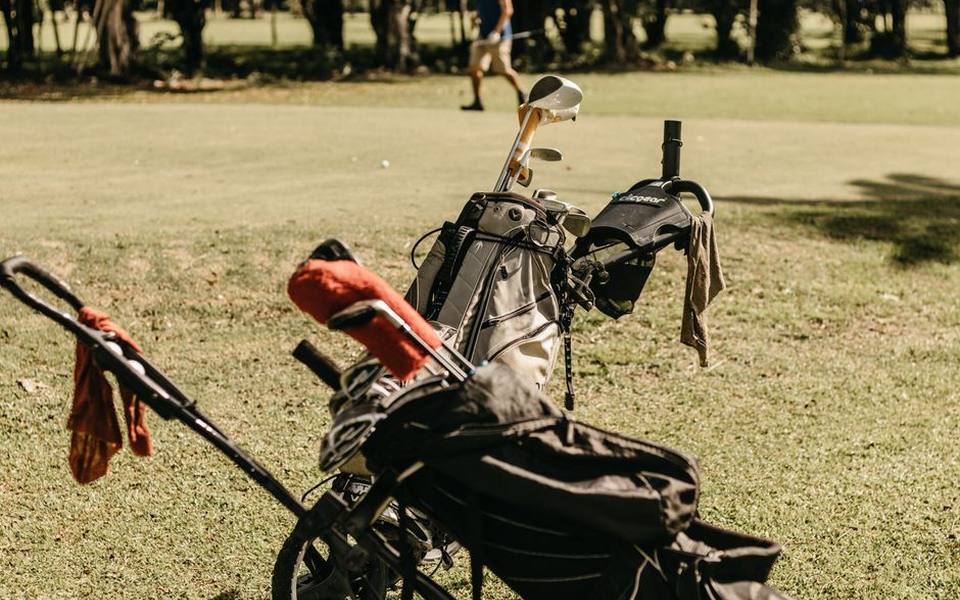
Launch angle and backspin rate form the essential combination for optimizing carry distance and roll. For drivers, achieving an upward angle of attack produces a high-launch, low-spin trajectory that maximizes overall yardage. For irons, fitters monitor spin rates carefully—typically seeking roughly 1,000 RPM per iron number—to ensure approach shots reach sufficient peak height and stop reliably on firm putting greens rather than skidding into trouble over the back edge.
Another vital metric is descent angle, which indicates how steeply the ball falls back to earth. Without an adequate descent angle, even well-struck iron shots cannot hold modern greens. Golfers testing equipment in indoor simulator bays often find that switching from a heavy, boardy shaft to a lighter, more responsive profile instantly restores desirable apex height and soft landing angles without requiring fundamental swing modifications.
Indoor Simulators Versus Outdoor Grass Driving Ranges
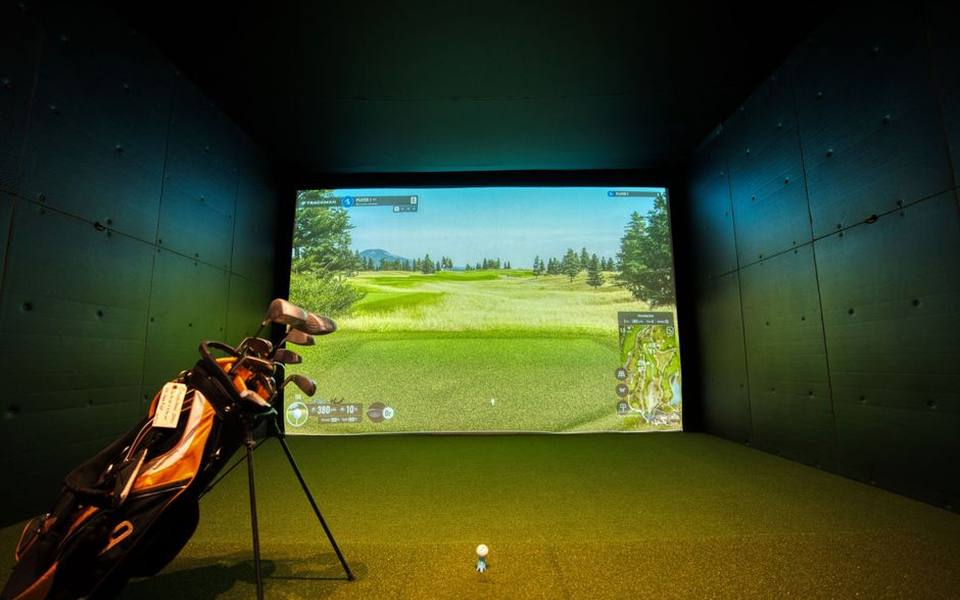
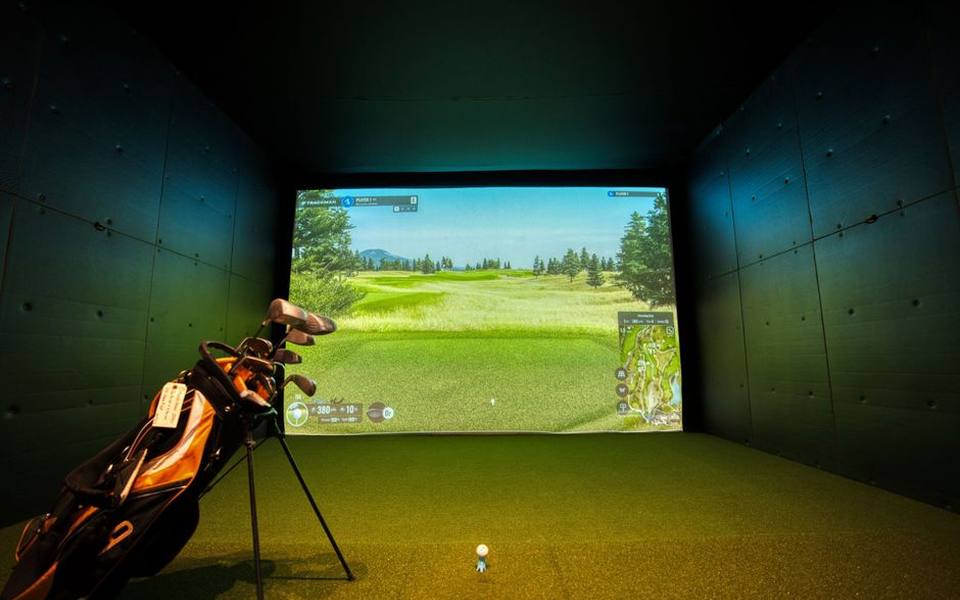
Fitters typically operate in one of two settings: climate-controlled indoor simulator bays or outdoor practice facilities. Indoor studios utilize high-speed optical or radar tracking units to calculate trajectory and render virtual ball flight on high-definition projection screens. Indoor environments eliminate wind, ambient temperature variations, and wet conditions, creating an exceptionally stable, repeatable testing laboratory where subtle changes in shaft stiffness or weight become immediately apparent.
However, hitting off artificial turf mats indoors can sometimes disguise slightly heavy strikes, as the clubhead tends to bounce through the synthetic turf rather than digging into authentic soil. Outdoor fittings at dedicated golf driving ranges provide the undeniable benefit of viewing full, unsimulated ball flight from launch to landing. Watching how the golf ball penetrates real air and experiencing genuine turf interaction gives many traditional players greater confidence in their equipment choices.
Outdoor radar systems track the entire flight path across hundreds of yards, though external wind conditions and temperature swings must be considered when evaluating data. When deciding where to schedule your session, factor in your personal preferences. If you play predominantly on windy coastal courses or struggle to visualize ball flight on digital screens, an outdoor grass fitting offers the most realistic glimpse of on-course performance.
How to Choose the Best Fitter Near You
Selecting the right professional requires looking past flashy advertising and examining credentials and testing philosophy. The most qualified fitters hold certifications from recognized industry bodies, such as the Association of Golf Clubfitting Professionals (AGCP), or have completed advanced training with major equipment manufacturers. A skilled fitter acts as an unbiased diagnostic consultant rather than a salesperson focused on clearing out aged retail inventory.
When evaluating local facilities, ask whether the studio is brand-agnostic. Some fitting centers maintain accounts with every major equipment brand, providing access to diverse head designs and custom aftermarket shafts during a single appointment. Other studios operate as single-brand fitting accounts. While single-brand facilities can be excellent if you are loyal to one manufacturer, brand-agnostic fitters let you compare competing heads and shafts side-by-side on an even playing field.
Pay close attention to the golf balls used during the session. Reputable fitting centers always conduct their tests using premium, multi-piece tour-caliber golf balls rather than worn, rock-hard driving range balls that generate inaccurate spin and distance numbers. Reading community reviews and inquiring about the facility's build guarantees ensures you collaborate with a professional dedicated to your long-term success on the course.
What to Bring and How to Prepare for Your Fitting
Proper preparation before your fitting session ensures you get the most accurate data and recommendations. Always bring your current set of golf clubs, your regular golf shoes, and the glove you wear during play. Having your existing equipment allows the fitter to establish a baseline of your normal carry distances, launch angles, and dispersion patterns before testing potential replacement options.
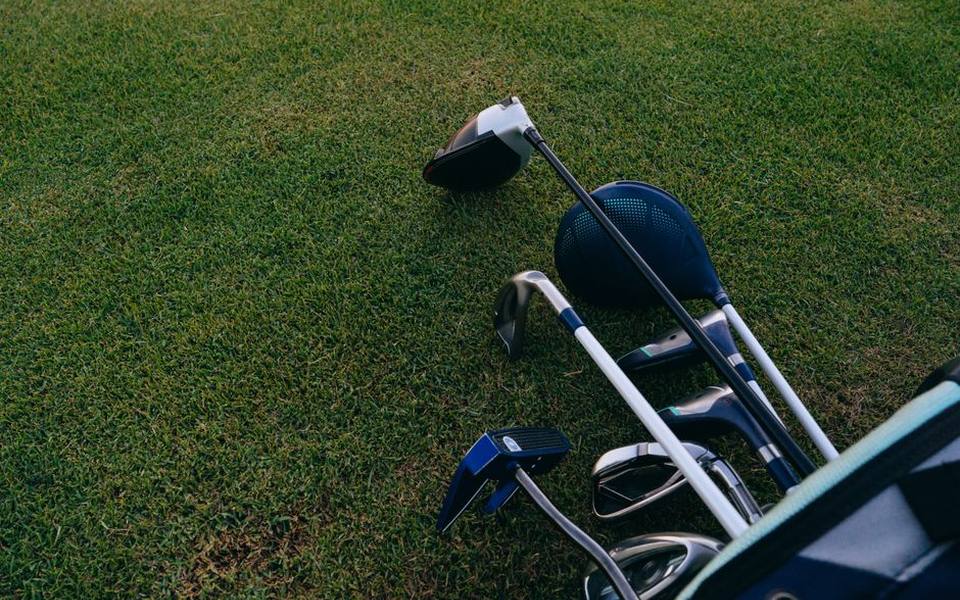
Physical endurance is another factor that golfers frequently overlook. A thorough full-bag fitting can require hitting anywhere from 80 to 150 full swings in a relatively short window. To avoid fatigue that degrades your natural mechanics halfway through the session, warm up lightly with dynamic stretches before your appointment rather than exhausting your arms and back by pounding full buckets of balls beforehand.
Timing your fitting relative to your swing development is equally important. If you are currently undergoing major swing overhauls with an instructor, scheduling a fitting in the middle of mechanical transitions may result in clubs tailored to a swing you are actively trying to change. If you are taking regular coaching and swing lessons, consult your instructor first to ensure your swing mechanics are stable enough for custom specifications.
Post-Fitting Steps: Custom Builds, Adjustments, and Regripping
Once your session concludes, your fitter will provide a comprehensive specification sheet detailing recommended clubhead models, loft and lie angles, shaft models, flex profiles, swingweights, and grip sizes. You can place a custom order directly through the fitting facility or take your spec sheet to an authorized dealer. High-quality fitting studios verify every club on a digital spec gauge upon delivery to confirm that factory assembly matches your blueprint.
Not every fitting requires an expensive full-bag purchase. Often, a fitter discovers that your current iron heads work well, but your lie angles need a two-degree adjustment or your shafts are slightly too heavy. Retrofitting your existing clubs—by bending hosels, trimming shafts, or altering head weights—can resolve persistent ball flight issues at a fraction of the cost of buying an entirely new iron set.
Grip condition and dimensions are often the easiest adjustments to make post-fitting. An undersized grip can encourage overly active hands and hooks, while an oversized grip can inhibit face rotation and cause weak blocks. Visiting a shop that provides on-site club regripping lets you quickly refresh worn rubber and match the exact diameter and texture recommended by your fitter.
Never leave a fitting session without obtaining a complete printed or digital record of your build specifications, including shaft weight, swingweight, and lie angles, so you retain full ownership of your data regardless of where you purchase.
Published 2026-09-20 · reviewed with each rebuild, last September 2026.
Find driving ranges near you
The directory lists 3,693 driving ranges by state and city — pick your state or use the “Near me” button in the header.
More guides
-
 Buying
Realistic Costs and Equipment Needed for a Home Golf Simulator
-
 Service
Golf Club Maintenance: Regripping and Reshafting Guide
-
 Money
MoneyGolf Lessons Cost and Beginner Guide: What to Expect and How to Budget
-
 Buying
A Practical Guide to Buying, Selling, and Trading In Used Golf Clubs
-
 Money
MoneyDriving Range Costs, Practice Routines, and Range Etiquette
-
 Service
Fixing Topped Shots and Improving Ball Striking on the Range
-
 Buying
Best Golf Launch Monitors Buying Guide: Space, Tech, and Budget
-
 Buying
The Complete Guide to Buying Used Golf Clubs and Pre-Owned Equipment
-
 Buying
How to Choose the Best Local Golf Shop and Pro Shop Services
-
 Owning
Miniature Golf and Putt-Putt Guide: Rules, Courses, and Family Fun
-
 Service
Complete Guide to Custom Golf Fitting and Shaft Selection
-
 Buying
Complete Guide to Buying and Maintaining Golf Shoes and Cleats
-
 Owning
Designing and Installing Indoor and Backyard Putting Greens
-
 Service
Golf Swing Analytics, Speed Training, and Shot Tracking Systems
-
 Buying
Golf Practice Nets, Driving Mats, and Backyard Hitting Setups
-
 Buying
How to Buy Used Golf Clubs and Get the Best Demo Day Deals
-
 Owning
Custom Golf Gear Personalization: Stampers, Bags, and Embroidery
-
 Buying
Selecting and Setting Up Home Golf Simulators and Launch Monitors
-
 Service
Choosing Golf Academies, Lessons, and Coaching Programs
-
 Buying
Custom Golf Club Fitting: Shafts, Clubheads, and Specifications
-
 Service
Entertainment Driving Ranges: Planning Group Outings, Corporate Events, and Bachelor Parties
-
 Service
Mini Golf, Footgolf, and Indoor Golf: Complete Venue Guide and Directory
-
 Owning
Tournaments, Scoring Tech, and Gear Upkeep: The Modern Golfer's Guide
-
 Buying
Golf Equipment and Club Fitting Guide: Starter Sets, Drivers, and Custom Builds
-
 Buying
Finding the Right Golf Pro Shop and Equipment Retailer
-
 Owning
Designing and Hosting Mini Golf Events: Indoor Party Venues and Practice Games
-
 Buying
Indoor Golf Practice and Launch Monitors: How to Build Your Studio
-
 Buying
Golf Laser Rangefinders Buyer's Guide: Features, Accuracy, and Value
-
 Owning
Golf Club Groove Maintenance: Tools, Techniques, and Equipment Care
-
 Buying
Commercial Golf Green Mowers: Maintenance, Selection, and Buying Guide
-
 Owning
Best Mobile Golf Simulators and Games for Practice and Play
-
 Owning
Fixing Heavy Contact, Managing Distance, and Choosing Cold-Weather Gear
-
 Buying
Club Car Golf Carts: The Practical Guide to Buying, Inspecting, and Customizing
-
 Owning
Complete Guide to Putt-Putt Games: History, Titles, Platforms, and Walkthroughs
-
 Service
Top Sports Bars and Lounges: How to Pick the Best Game-Day Spots in NYC and Florida
-
 Safety
24-Hour Gun and Shooting Ranges: Availability, Rules, and Finding Round-the-Clock Facilities
-
 Owning
Golf Green Mobile Estates: Guide to Golf Community Living and Amenities