Understanding What Causes Heavy Contact Behind the Ball
Striking the turf before making contact with the ball, commonly known as hitting a shot fat, happens when the lowest point of your swing arc occurs several inches behind the target. In a clean iron strike, the clubhead descends toward the ball, meets the cover first, and then continues downward into the turf to carve a shallow divot forward of the initial lie. When that low point shifts backward, the club enters the ground early, dumping nearly all its kinetic energy into the dirt.
The primary mechanical culprit behind heavy contact is an improper weight shift during the transition and downswing. Many golfers attempt to help the ball airborne by leaning back onto their trailing foot through impact, which naturally lowers the trailing shoulder and drops the swing arc prematurely. When your sternum remains anchored over or behind the rear foot rather than shifting smoothly ahead of the ball position, the club has nowhere to go except straight into the soil.
Another frequent contributor is early release, often called casting, where the angle between your lead forearm and the club shaft unhinges too early on the way down. When you lose that wrist hinge before reaching the hitting zone, the club reaches its full extension before it ever reaches the ball. Paired with tense grip pressure and an involuntary deceleration through the hitting area, casting almost guarantees heavy contact or an overcorrected thin strike.
Practical Range Drills to Clean Up Turf Interaction
Curing heavy strikes requires retraining your body to deliver the clubhead downward and forward with stable posture. A dependable station drill involves placing a small towel or an extra headcover roughly three to four inches behind your golf ball on the practice tee. Your sole objective during half-speed swings is to strike the ball cleanly without clipping the fabric, which forces your hands forward and encourages your body weight to clear onto your front side.
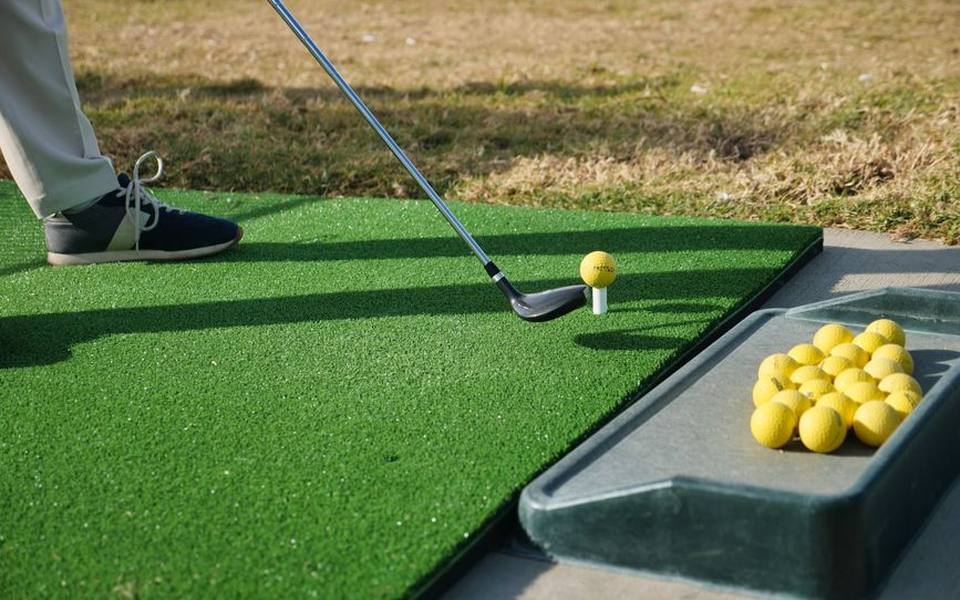
Another effective routine is the line drill, which works particularly well on natural grass tees. Draw a line in the turf using alignment chalk or the edge of a tee, place your balls directly on that boundary, and focus solely on ensuring that every divot starts on the target side of the line. Practicing this discipline at covered, all-weather hitting bays during inclement weather keeps your fundamentals sharp even when standard outdoor grass areas are closed or saturated.
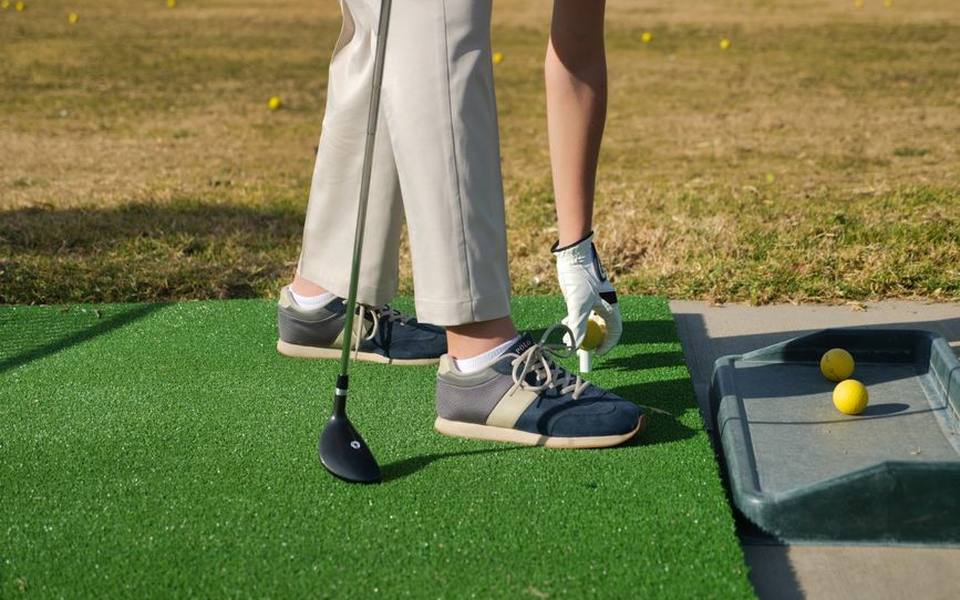
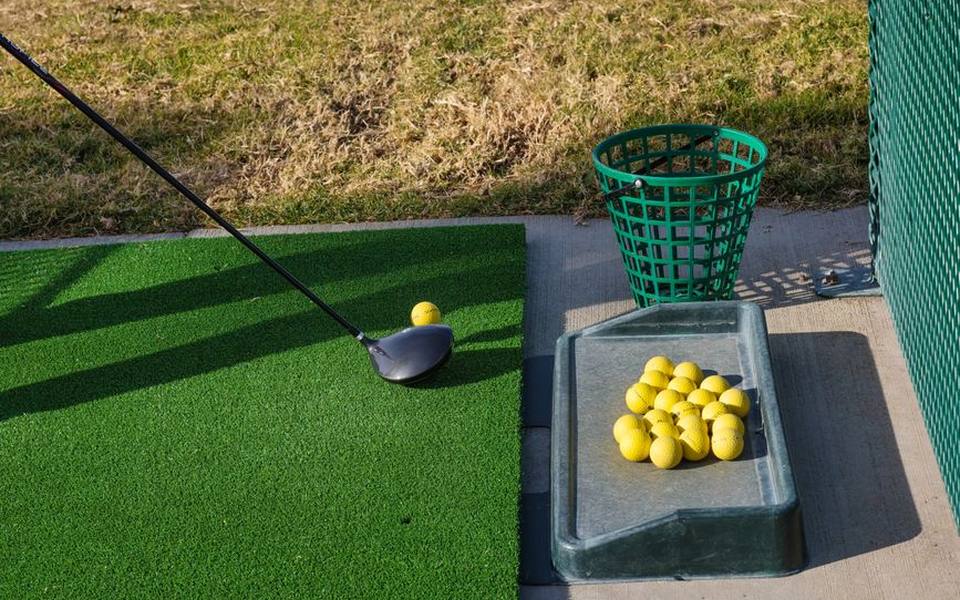
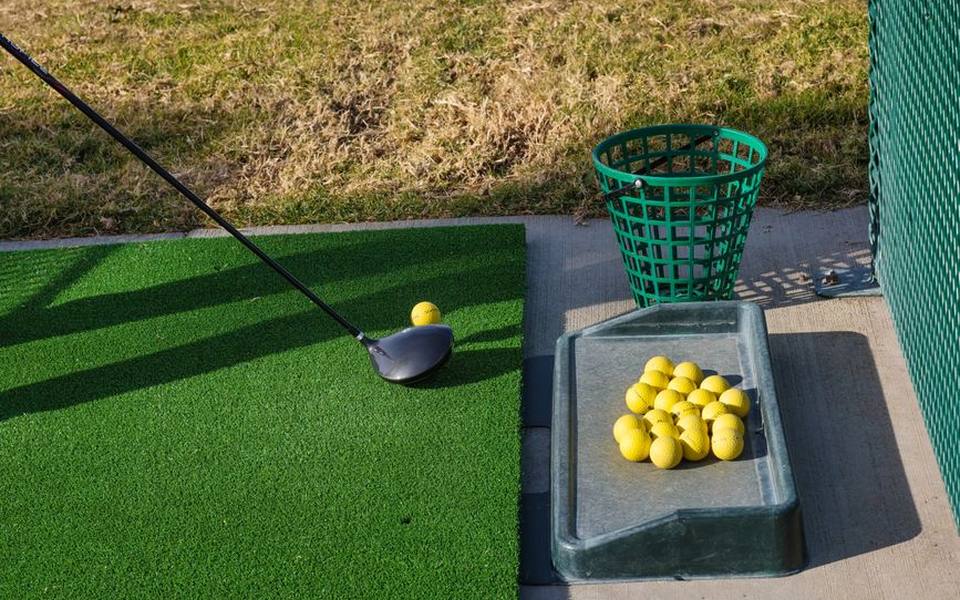
Be cautious when diagnosing low-point issues solely off synthetic hitting mats, because firm rubber underlays can mask fat shots. A heavy strike on an artificial mat will often bounce into the ball, producing acceptable flight numbers despite flawed delivery mechanics. Listen carefully to the audio cues on the mat; a muffled, double-thump sound indicates you caught the turf substitute well before the ball, signaling that your swing bottom is still falling behind.
Building Dependable Distance Control from Wedge to Long Irons
Consistent distance control relies far more on strike quality and centeredness of contact than raw swing speed. An off-center strike struck high on the clubface or out toward the toe can drop ball speed by five to ten percent, which easily translates into a ten-yard deficit on mid-iron shots. Golfers who struggle to hold greens often blame their club selection when the real issue is random contact dispersion across the face.
Developing repeatable yardages requires establishing a structured system for your wedge game and scoring clubs. Rather than attempting to guess swing power on feel alone, calibrate your partial shots around clock positions or arm heights, such as lead arm parallel to the ground for a half swing or chest-high for three-quarters. Keeping your swing tempo constant while altering backswing length provides predictable yardage increments that remain reliable under pressure.
You also need to audit the gap spacing across your set, ensuring that your irons provide steady ten-to-twelve-yard separations between consecutive clubs. Modern club sets often feature aggressively strong lofts in the middle and short irons, which can leave a gaping twenty-yard void between your pitching wedge and your first specialty wedge. Regular range sessions dedicated strictly to charting landing yardages will highlight any dead zones in your bag.
Calibrating Ball Flight Numbers with Launch Technology
While visual estimates on a traditional range give you a rough sense of trajectory, automated tracking reveals the subtle metrics that dictate carry distance. Strike parameters such as launch angle, dynamic loft, backspin rate, and ball speed determine whether an iron shot holds its line or balloons into the wind. Seeing these figures on a monitor lets you connect physical swing feelings with actual ball flight realities.
Practicing at indoor golf & simulator bays allows you to collect accurate carry distances without environmental interference like crosswinds or soggy range balls skewing your baseline. Indoor simulators measure pure ball performance directly off the face, making it simple to map out carry yardages for every club in your bag. This clean data gives you a reliable benchmark before you head out onto unpredictable outdoor turf.
Take special note of your landing descent angle when examining iron data during tracking sessions. For mid and short irons, an approach angle of forty-five degrees or steeper is typically required to stop the ball quickly on firm greens. If your delivery creates low spin and a flat landing angle, you will struggle with distance management on the course because your ball will roll uncontrollably after touching down.
The Physics of Golf in Colder Temperatures
When the thermometer drops below fifty degrees Fahrenheit, your normal summer yardages no longer apply. Cold air is measurably denser than warm air, meaning every shot encounters increased aerodynamic drag and lift forces as it travels. This air density difference typically robs a player of about one to two yards of carry distance for every ten-degree drop in ambient temperature, independent of swing technique.
Compounding the aerodynamic penalty is the physical limitation placed on your own body by chilly conditions. Bulky winter layers restrict shoulder turn and hip rotation, which directly reduces your clubhead speed by two to four miles per hour on average. Furthermore, your muscles and tendons take significantly longer to reach optimal elasticity, meaning your early-round swings will naturally generate slower exit velocities off the clubface.
Course turf also behaves radically differently in winter months, fluctuating between rock-hard frozen ground and squishy, waterlogged fairways. Frozen ground eliminates spin-induced stopping power, turning normal landing zones into runaway surfaces where balls kick forward unpredictably. Conversely, wet dormant bermuda or bentgrass will produce zero rollout, requiring you to fly the ball all the way to the flagstick with a higher club selection.
Choosing the Right Golf Ball for Freezing Days
Playing the exact same tour-level ball year-round is a mistake once cold weather settles across your region. Premium multi-layer balls with firm cores require significant clubhead speed to compress efficiently under standard conditions. When those inner core materials drop to low temperatures, the rubber compounds harden further, leading to a noticeable drop in initial velocity and an uncomfortably harsh sensation through the hands at impact.

Switching to a lower-compression model during late autumn and winter helps offset the stiffening effect of sub-fifty-degree temperatures. A two-piece or three-piece ball with a softer overall core compression deforms more easily off the face, allowing moderate swing speeds to retain reasonable energy transfer. While you may surrender a negligible amount of greenside spin compared to urethane models, the boost in feel and carry consistency is well worth the tradeoff.
Visibility is another critical consideration when selecting winter golf balls, particularly on courses with frosty fairways or pale, dormant turf. Standard white balls easily disappear against pale yellow bermuda, heavy dew, or melting patches of frost. Selecting high-visibility matte yellow, neon orange, or bright green options speeds up pace of play significantly and saves you from losing well-struck shots in plain sight along the fairway edges.
Ball Management and Temperature Habits on the Course
A common mistake among winter players is leaving their golf bag in the car trunk or an unheated garage overnight. Golf balls that have been chilled down to freezing temperatures for hours require hours of warmth to regain their normal elasticity. Bringing your golf bag inside the house the evening before a chilly round ensures that the core materials start the day at room temperature.
During the round itself, establish a habit of alternating two balls between holes to keep them reasonably warm. Keep one ball tucked securely inside an interior jacket pocket where your body heat can maintain core warmth while you play the hole with the other. Simply swap them on each tee box, ensuring neither ball spends extended time exposed to biting winds or icy ground moisture.
Take extra care when cleaning your ball on damp, frigid days, as cold mud adheres stubbornly to dimple patterns and creates erratic aerodynamic flight. Carry a designated wet-and-dry microfleece towel inside your outerwear rather than leaving it clipped to the outside of your bag where it can stiffen in the wind. A clean dimple surface ensures predictable lift and consistent carry through dense winter air.
Finding Reliable Golf Umbrellas and Timing Seasonal Sales
A flimsy single-canopy umbrella will quickly invert and snap during the sudden wind gusts common to late-season coastal or links rounds. A durable golf umbrella must feature a double-canopy construction with tensioned wind vents that allow pressurized air to escape without flipping the frame inside out. Look for a generous diameter of sixty to sixty-eight inches to fully shield both your golf bag and yourself while walking.
Frame materials are equally important; lightweight fiberglass shafts and flexible composite ribs absorb violent wind flex without bending permanently out of shape like cheap aluminum components. Additionally, examine the handle profile before purchasing, as ergonomic non-slip rubber handles seat securely in standard push-cart umbrella holders without slipping loose during turbulent downpours or heavy walking vibrations.
Shopping for heavy-duty rain accessories is all about timing, as pro shops and outdoor retailers regularly offer steep discounts on wet-weather equipment during end-of-season inventory clearances. The best clearance cycles typically hit retail floors in late autumn and mid-winter when stores offload surplus seasonal stock to make room for springtime apparel. Keeping an eye out during these inventory transitions lets you secure high-end storm protection for a fraction of retail.
Essential Bag Accessories for Wet and Cold Weather
Beyond an umbrella and softer golf balls, a successful winter kit requires specialized accessories to protect your hands and clubs. Rain gloves made from synthetic microfiber are indispensable because their grip strength actually improves as moisture increases, preventing the club from twisting on damp strikes. Pair these with heavy winter cart mitts lined with thermal fleece to slide over your hands between shots.

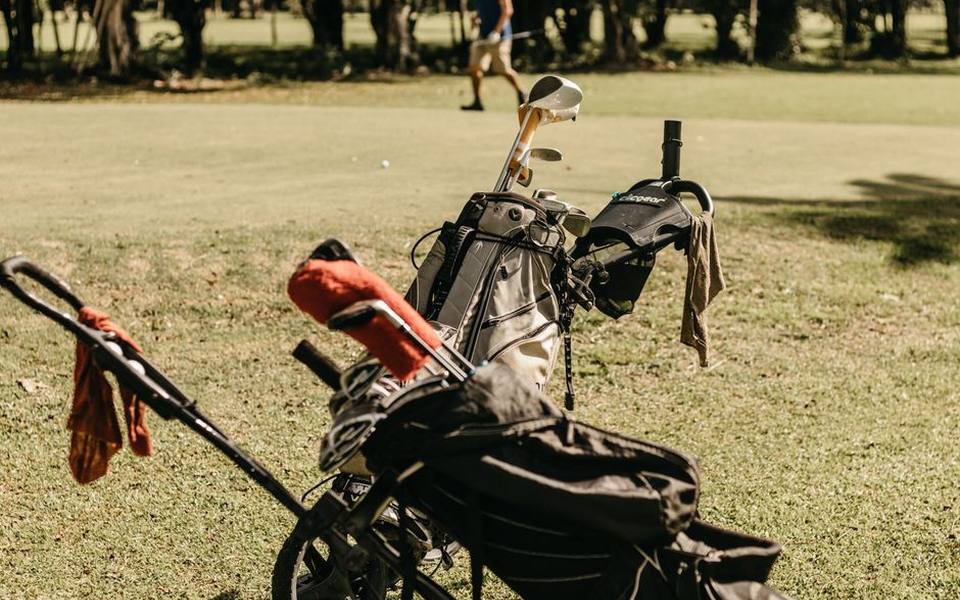
Moisture management inside your golf bag is another area that golfers often overlook until grips become slick and unplayable. Keeping a waterproof bag hood permanently zipped over your club heads shields the grips from falling rain and heavy drizzle while you walk. If moisture drips down the graphite shafts into the base of the bag, grips will absorb water from underneath and lose their tackiness.
Carrying a portable electronic hand warmer or air-activated chemical heat packets inside your pocket keeps your fingers responsive through eighteen holes. Cold fingers lose sensory feedback and lead to excessive grip tension, which triggers both the casting motion that causes fat shots and poor speed control on the greens. Keeping your extremities warm preserves the delicate touch required for short-game precision.
Addressing Underlying Equipment and Technique Issues
Sometimes chronic turf interaction flaws and erratic distance control stem from ill-fitting equipment rather than just swing faults. If your iron lie angles are excessively upright, the heel of the club will dig into the ground first, twisting the face shut and dragging the blade deep into the turf. Scheduling an evaluation through dedicated club fitting services ensures your lengths and lie angles match your posture.
Similarly, worn-out, slick grips force you to squeeze the club with excessive pressure, restricting natural wrist hinge and causing early release before the ball. Replacing tired grips with corded or moisture-wicking compounds restores traction, allowing you to swing with relaxed forearms and maintain a clean low-point delivery. Grips should typically be refreshed every year or forty rounds to retain their tacky surface texture.
If heavy strikes persist despite adjustments to your setup and ball position, working with a certified instructor at facilities offering golf lessons can rapidly diagnose your swing arc mechanics. A trained eye can spot subtle hip slide or reverse-pivot issues that are difficult to feel on your own, setting you on a clear path toward crisp contact in every season.
Published 2026-09-21 · reviewed with each rebuild, last September 2026.
Find driving ranges near you
The directory lists 3,693 driving ranges by state and city — pick your state or use the “Near me” button in the header.
More guides
-
 Buying
Realistic Costs and Equipment Needed for a Home Golf Simulator
-
 Service
Golf Club Maintenance: Regripping and Reshafting Guide
-
 Money
MoneyGolf Lessons Cost and Beginner Guide: What to Expect and How to Budget
-
 Buying
Golf Club Fitting Cost and Selection Guide
-
 Buying
A Practical Guide to Buying, Selling, and Trading In Used Golf Clubs
-
 Money
MoneyDriving Range Costs, Practice Routines, and Range Etiquette
-
 Service
Fixing Topped Shots and Improving Ball Striking on the Range
-
 Buying
Best Golf Launch Monitors Buying Guide: Space, Tech, and Budget
-
 Buying
The Complete Guide to Buying Used Golf Clubs and Pre-Owned Equipment
-
 Buying
How to Choose the Best Local Golf Shop and Pro Shop Services
-
 Owning
Miniature Golf and Putt-Putt Guide: Rules, Courses, and Family Fun
-
 Service
Complete Guide to Custom Golf Fitting and Shaft Selection
-
 Buying
Complete Guide to Buying and Maintaining Golf Shoes and Cleats
-
 Owning
Designing and Installing Indoor and Backyard Putting Greens
-
 Service
Golf Swing Analytics, Speed Training, and Shot Tracking Systems
-
 Buying
Golf Practice Nets, Driving Mats, and Backyard Hitting Setups
-
 Buying
How to Buy Used Golf Clubs and Get the Best Demo Day Deals
-
 Owning
Custom Golf Gear Personalization: Stampers, Bags, and Embroidery
-
 Buying
Selecting and Setting Up Home Golf Simulators and Launch Monitors
-
 Service
Choosing Golf Academies, Lessons, and Coaching Programs
-
 Buying
Custom Golf Club Fitting: Shafts, Clubheads, and Specifications
-
 Service
Entertainment Driving Ranges: Planning Group Outings, Corporate Events, and Bachelor Parties
-
 Service
Mini Golf, Footgolf, and Indoor Golf: Complete Venue Guide and Directory
-
 Owning
Tournaments, Scoring Tech, and Gear Upkeep: The Modern Golfer's Guide
-
 Buying
Golf Equipment and Club Fitting Guide: Starter Sets, Drivers, and Custom Builds
-
 Buying
Finding the Right Golf Pro Shop and Equipment Retailer
-
 Owning
Designing and Hosting Mini Golf Events: Indoor Party Venues and Practice Games
-
 Buying
Indoor Golf Practice and Launch Monitors: How to Build Your Studio
-
 Buying
Golf Laser Rangefinders Buyer's Guide: Features, Accuracy, and Value
-
 Owning
Golf Club Groove Maintenance: Tools, Techniques, and Equipment Care
-
 Buying
Commercial Golf Green Mowers: Maintenance, Selection, and Buying Guide
-
 Owning
Best Mobile Golf Simulators and Games for Practice and Play
-
 Buying
Club Car Golf Carts: The Practical Guide to Buying, Inspecting, and Customizing
-
 Owning
Complete Guide to Putt-Putt Games: History, Titles, Platforms, and Walkthroughs
-
 Service
Top Sports Bars and Lounges: How to Pick the Best Game-Day Spots in NYC and Florida
-
 Safety
24-Hour Gun and Shooting Ranges: Availability, Rules, and Finding Round-the-Clock Facilities
-
 Owning
Golf Green Mobile Estates: Guide to Golf Community Living and Amenities