Tracking Tournaments with Live Leaderboards and Shot Feeds
Following professional tournament golf has evolved far beyond waiting for television broadcasts to cycle through top scores every quarter hour. Today, digital tournament boards update shot by shot within seconds of an impact, using ground sensors, optical tracking, and volunteer walking scorers. When you monitor a live leaderboard during tournament play, you are seeing real-time scoring data alongside advanced metrics like driving distance, proximity to the hole, and strokes gained against the field.
Major tours now integrate high-speed tracking radars on every tee box and putting surface. That means if a player pulls a drive into a fairway bunker or drains a thirty-foot birdie putt, the numeric scoring board adjusts almost instantaneously. For golf enthusiasts trying to keep tabs on player movements while running afternoon errands or working at their desks, these digital feeds provide hole-by-hole status, current group position, and projected cut lines as conditions change.
Understanding how cut lines shift throughout Friday afternoon rounds helps clarify why scores fluctuate so wildly. Most standard professional fields trim the roster to the top sixty-five or seventy players and ties after thirty-six holes. Real-time statistical boards let you watch the cut bubble in real time, showing how wind shifts or firmer greens late in the day can turn an even-par round into a weekend qualification or an early trip home.
Championship Rotations and Future Open Venues
Planning a golf trip around historic championships requires understanding how governing bodies select host courses years in advance. The Open Championship, organized by the R&A, relies on a cherished rota of coastal links courses spread across Scotland, England, and Northern Ireland. Venues like St Andrews, Royal Troon, Royal Birkdale, and Royal Portrush are awarded tournaments based on course infrastructure, spectator capacity, and local transport networks.
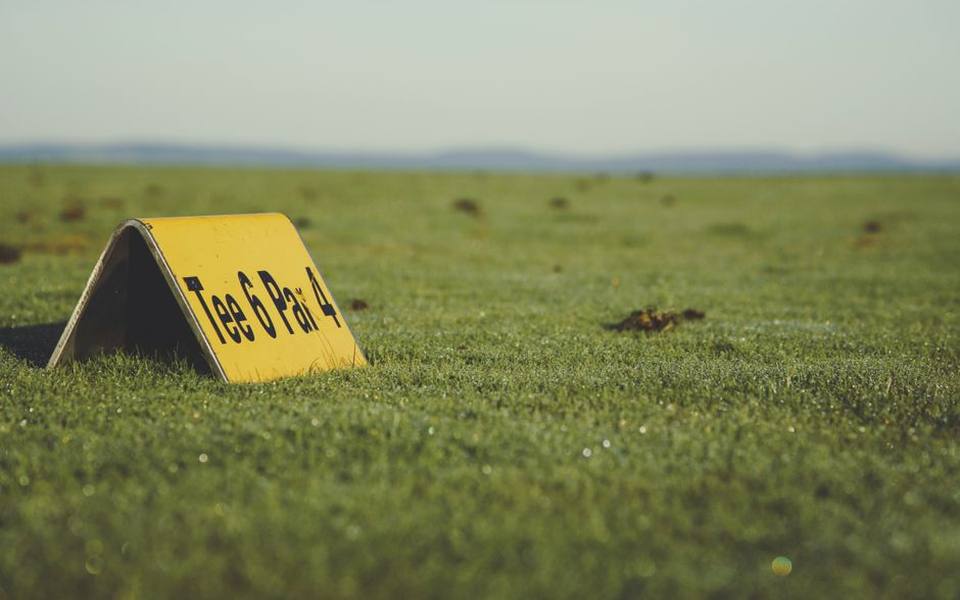
Future venue announcements typically look four to five years into the calendar to allow host towns enough preparation time for tens of thousands of international visitors. When links such as Royal Birkdale or Portrush secure hosting rights, extensive work begins on agronomy, rough management, and grandstand routing. Unlike inland parkland courses, these maritime layouts must withstand fierce coastal weather while preserving the firm, running turf characteristics that define traditional seaside tournament play.
Securing tickets or planning travel to these historic sites demands early preparation, as accommodation in small seaside communities sells out almost immediately after dates are confirmed. Many traveling golfers combine tournament attendance with rounds on nearby public courses. Checking open dates well ahead of time allows visitors to experience authentic links turf firsthand, testing their ball striking against the same coastal elements that challenge the finest players in the world.
Green Maps and Modern Putting Surface Topography
Reading putting surfaces accurately is one of the steepest learning curves in golf, which is why detailed topographical yardage books have become essential tools. These books display detailed contour lines, break directions, and slope percentages measured through laser scanning technology. By examining subtle elevation changes marked on each diagram, players can determine whether an apparent flat stretch actually carries a subtle one-percent tilt toward water or drainage basins.
Tournament rules have tightened around green books in recent seasons to protect traditional visual reading skills. Governing bodies now restrict the physical size of yardage booklets and cap the scale of slope illustrations, preventing players from relying on overly magnified contour charts. Amateurs, however, can still freely purchase detailed books for their home courses to gain insight into grain direction, false fronts, and tiers that deceive the naked eye.
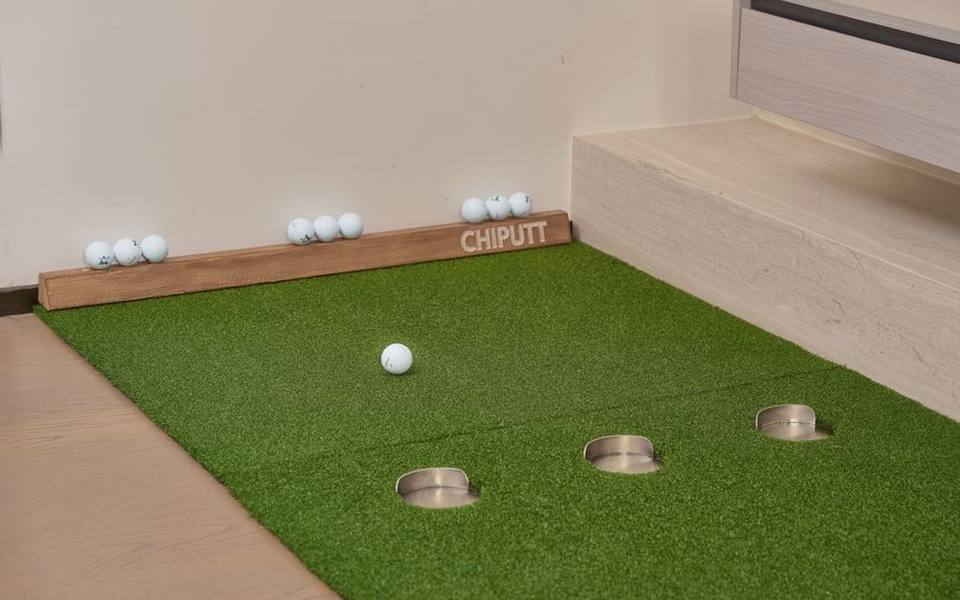
Practicing with green maps on local putting surfaces helps players develop a clearer sense of how elevation affects roll speed. When golfers see a mapped contour and then stroke putts across it at varying speeds, their spatial awareness improves dramatically. Spending focused time on practice greens, whether at municipal courses or dedicated public practice facilities, bridges the gap between printed elevation data and physical feel.
Ball Markers and Etiquette on the Putting Surface
Marking a golf ball on the green might seem like a simple mechanical step, but proper technique prevents rules disputes and preserves turf quality. According to the Rules of Golf, a marker can be an artificial object like a small flat coin, a stamped metal marker, or a tee pressed into the turf directly behind the ball. The object must be aligned properly before lifting the ball, ensuring the original lie is preserved accurately.
In friendly games, players often use decorative coins, poker chips, or custom alignment markers equipped with visual crosshairs. However, when your ball lies close to another player's line of putt, etiquette calls for using a completely flat, non-distracting marker so their rolling ball is not deflected if struck. If your mark still obstructs their path, you should measure one or two putter-head lengths away using a fixed background target to maintain alignment.
Modern ball markers often feature high-contrast alignment lines that match up with the side stamp on your golf ball. Setting the marker firmly into the turf allows you to crouch down, read the break, and rotate the ball to point toward your intended entry path before taking your stance. This small ritual promotes consistent setup routine and builds confidence on critical putts inside ten feet.
Understanding Private Club Membership Costs and Value
Evaluating the financial commitment of joining a private golf facility requires looking well beyond initial initiation fees. Whether considering an established regional layout like La Crosse Country Club in the Midwest or a local neighborhood club in your county, total membership costs typically split into several distinct categories. These include non-refundable initiation charges, recurring monthly dues, food and beverage minimums, and mandatory capital improvement assessments.
Initiation fees for regional country clubs typically range from a few thousand dollars up to tens of thousands depending on local market wealth and course exclusivity. Monthly dues in smaller metro areas often run several hundred dollars, while metropolitan clubs command considerably higher figures. Prospective members must also budget for locker fees, cart rental packages, bag storage, and occasional tournament entry assessments that accumulate over a full calendar year.
Before applying for membership, prospective members should evaluate how often they realistically intend to play and practice each week. If family access to swimming pools, tennis courts, and clubhouse dining balances the monthly expense, private clubs offer an exceptional lifestyle asset. However, players who primarily seek efficient practice hours or quick nine-hole rounds often find greater value pairing public memberships with dedicated visits to local driving bays.
Finding Post-Round Lounges and Late-Night Venues
Finding an inviting venue open late to watch West Coast tournament finishes or unwind after twilight practice rounds depends heavily on local licensing and neighborhood layout. Traditional golf clubhouses often close their dining rooms shortly after dusk, leaving evening golfers looking for nearby sports bars, taprooms, or commercial entertainment ranges that serve food and drinks late into the evening hours.
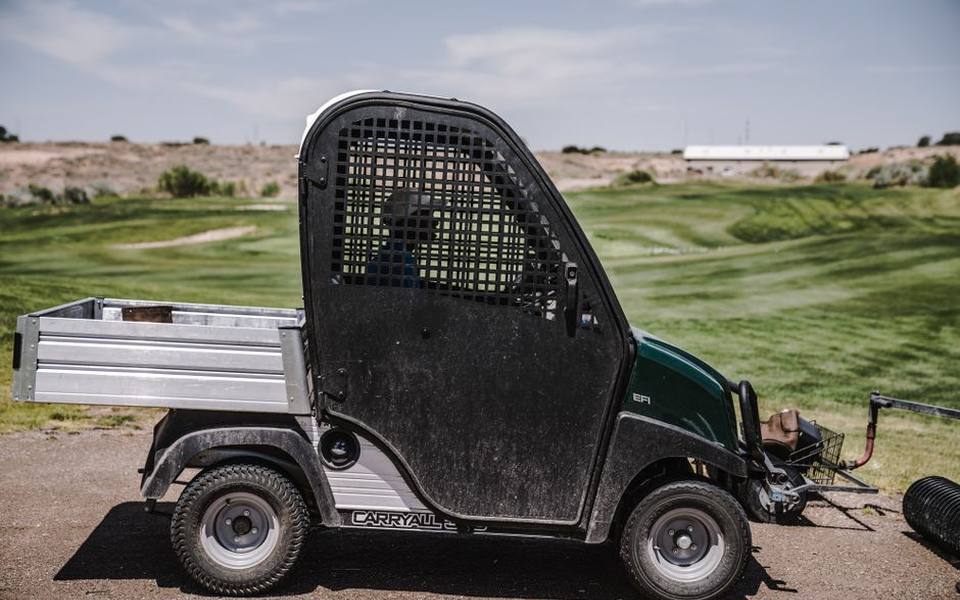
Modern entertainment driving ranges and sports lounges have largely stepped in to fill this late-evening gap. Many facilities with lighted tee lines maintain full kitchen service and sports broadcasts until midnight or later on weekends. Searching local dining map applications using current location filters typically displays sports grills and tavern menus operating within a short driving radius of regional golf corridors.
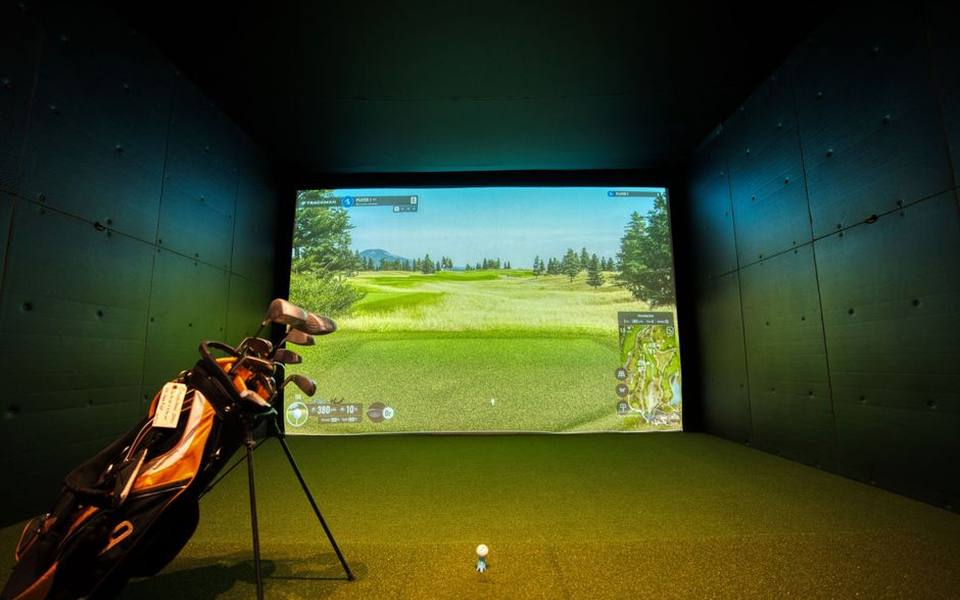
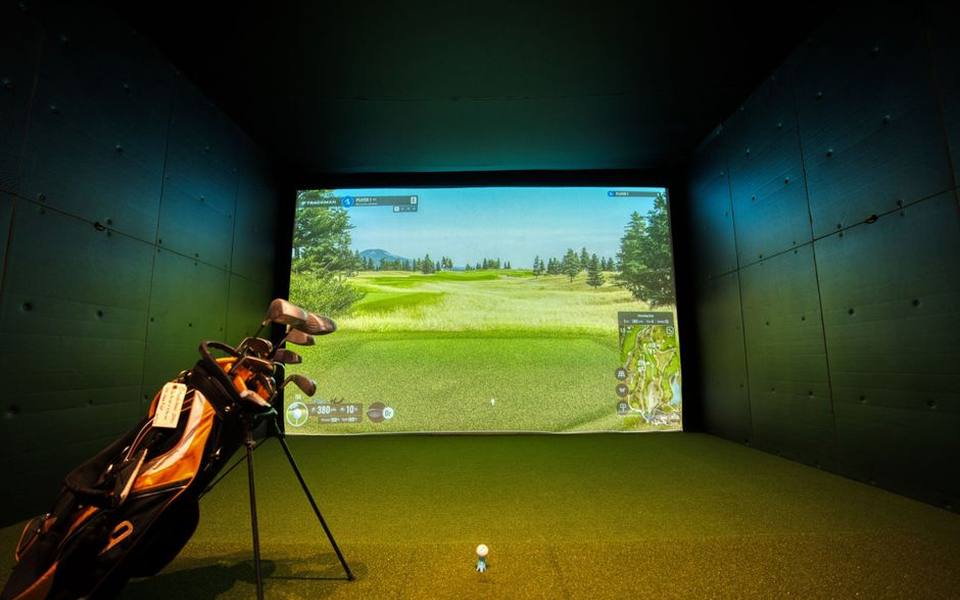
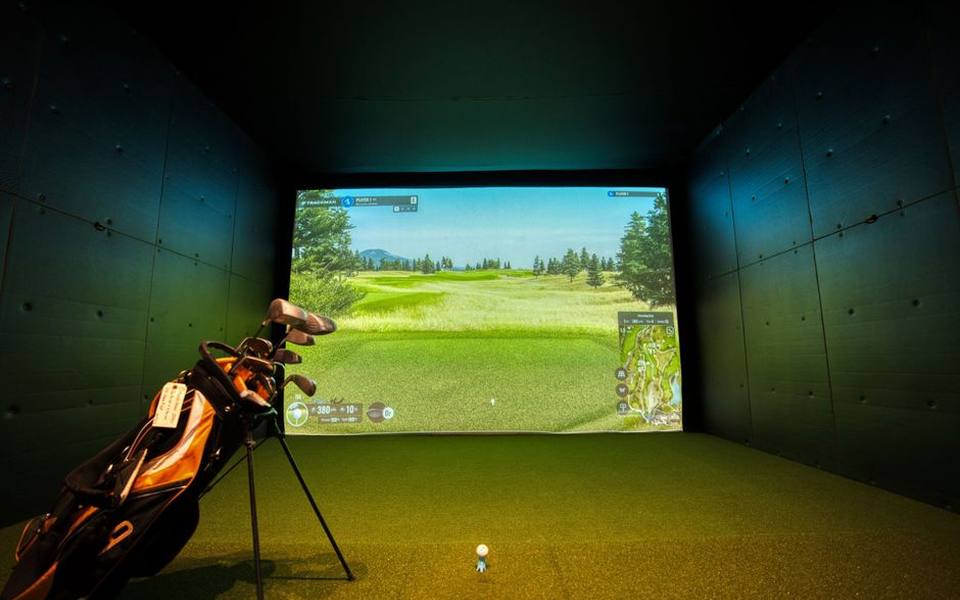
For golfers who want to combine nighttime recreation with televised golf coverage, commercial simulator centers offer another welcoming environment. Many venues featuring indoor golf simulators stay open well past standard clubhouse hours, allowing guests to watch major events on wall-mounted screens while hitting shots on virtual courses. These spots provide comfortable gathering places year-round regardless of outside temperatures or weather delays.
Evaluating Online Used Golf Equipment Retailers
Buying pre-owned golf equipment online has become common practice, but golfers naturally wonder whether large used-club storefronts operate legitimately. Major online retailers like GlobalGolf, 2nd Swing, and Callaway Pre-Owned are established, accredited commercial businesses that specialize in secondary equipment markets. They source gear through manufacturer partnerships, golf course trade-in networks, and individual customer trade programs across the United States.
Legitimate golf equipment websites employ trained inspection teams that verify club authenticity, examine shaft condition, and grade cosmetic wear before listing items. They typically offer clear condition rating charts—distinguishing between mint, very good, and value condition—so buyers know whether to expect clean faces or light scratches. Reputable platforms also back transactions with straightforward return policies and serial-number verification steps to eliminate counterfeit products.
When purchasing pre-owned clubs online, protecting yourself comes down to checking secure checkout badges, customer reviews, and clear warranty terms. Avoid buying from individual online classifieds where prices appear suspiciously low and return guarantees are absent. Sticking to established trade-in dealers ensures you receive authentic clubheads, correct shaft flexes, and playable grip conditions at sensible secondary market discounts.
Golf Career Academies and Modern Industry Education
The educational path for golfers seeking careers in course management, instruction, or club fitting has shifted significantly over the past decade. For many years, specialized vocational schools like the Golf Academy of America trained students across multiple campuses in club repair, business operations, and tournament management. However, when parent institutions faced regulatory and financial challenges in 2018, those vocational campuses abruptly closed their doors.
Today, individuals pursuing professional golf careers primarily turn to university-based PGA Golf Management (PGA PGM) programs accredited across major universities. These four-year degree tracks blend accredited business administration studies with practical golf operations, agronomy basics, and swing mechanics. Students complete internships at resort courses and private clubs, graduating with both a bachelor's degree and Class A PGA Membership credentials.
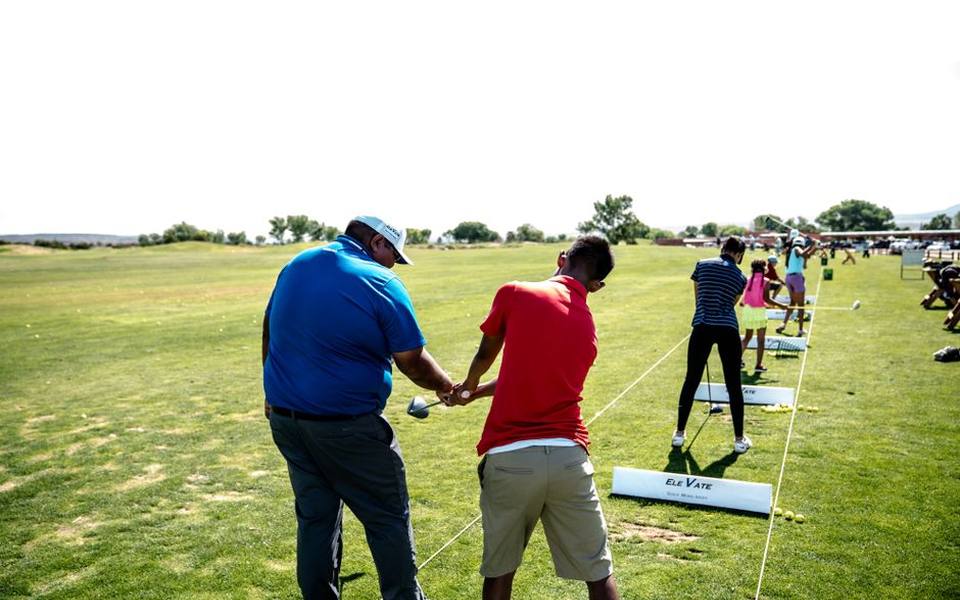
For players focused purely on developing personal swing technique rather than earning management degrees, localized instruction remains the most practical route. Working with qualified teaching professionals at practice centers offering regular lessons builds long-term fundamentals. This direct coaching route offers structured skill development without the substantial tuition overhead associated with traditional residential academy enrollment.
Synthetic Backyard Putting Greens and Project Costs
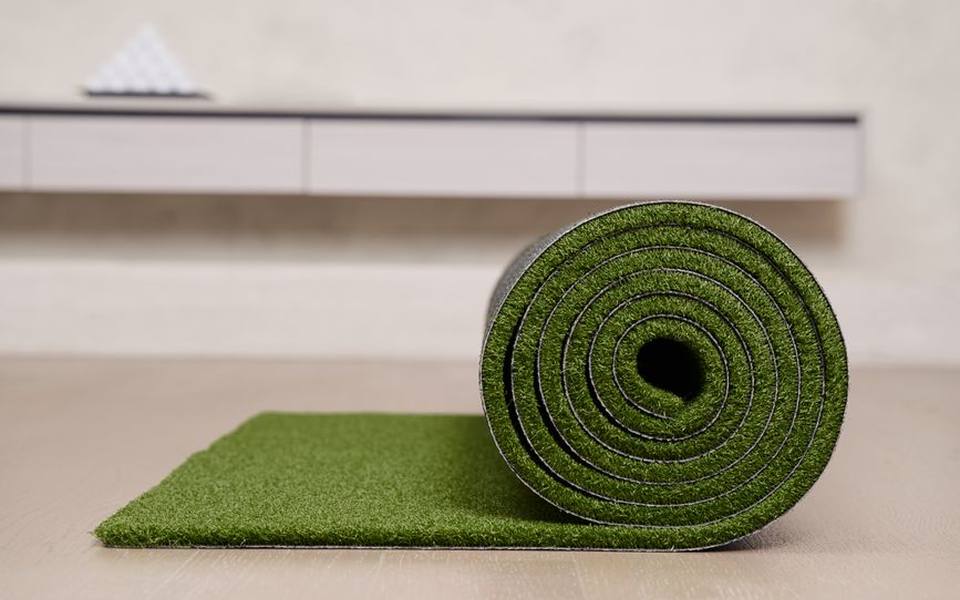
Installing an artificial putting surface at home provides year-round practice convenience, but project costs vary widely based on excavation depth and turf materials. Homeowners typically pay between fifteen and thirty-five dollars per square foot for a professionally installed synthetic putting green. A modest three-hundred-square-foot backyard green generally costs between forty-five hundred and ten thousand dollars, depending on access and terrain preparation.
The installation process involves far more than simply rolling out green turf over bare soil. Proper construction requires excavating native dirt, laying geotextile fabric, and compacting crushed aggregate stone bases to ensure perfectly smooth undulations and water drainage. High-density polypropylene or nylon fibers are then installed, cut to shape, and filled with rounded quartz sand infill to regulate ball roll speeds and simulate real grass.
Do-it-yourself kits can lower initial expenditures, but achieving smooth, true ball roll requires heavy plate compactors and precise grading skills. If the sub-base settles unevenly after seasonal freezes, the surface develops unplayable dips and puddles. Investing in experienced installers ensures adequate sub-surface drainage, durable seam construction, and natural-looking fringe turf that withstands years of sun exposure and foot traffic.
Step-by-Step Shaft Replacement on Golf Clubs
Replacing a damaged shaft or upgrading to a different flex profile is a manageable task if you possess proper clubmaking tools. The repair begins by removing the old shaft using controlled heat. For steel shafts, a standard propane torch or heat gun applied evenly around the hosel loosens the cured epoxy. Graphite shafts require extra care, using a dedicated mechanical shaft puller to draw the head straight off without delaminating carbon fibers.
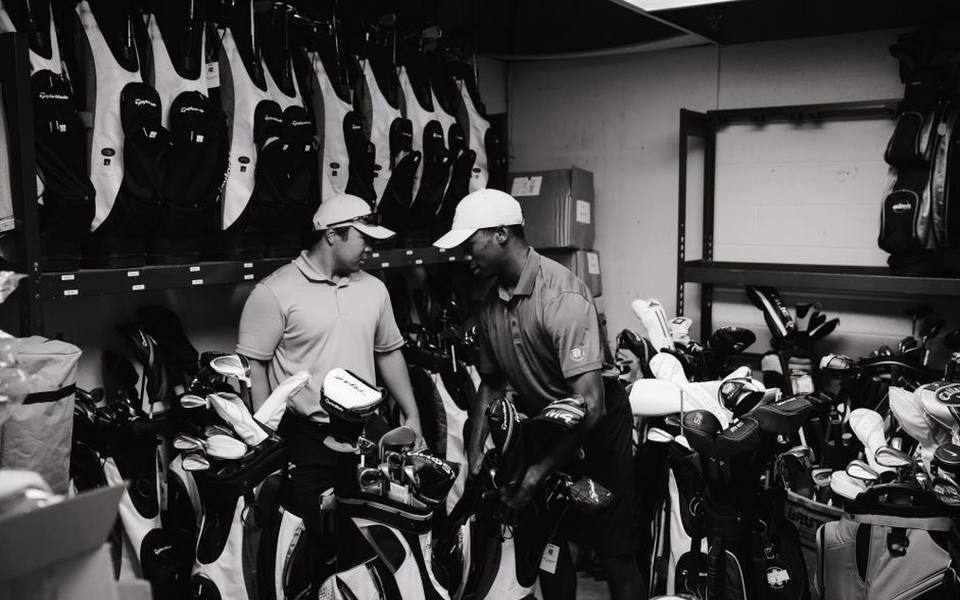
Once the clubhead is detached, the interior hosel bore must be thoroughly cleaned using a wire hosel brush and solvent to remove old epoxy residue. The tip of the replacement shaft is then abraded with sandpaper to remove exterior paint or chrome coating, creating a rough bonding surface. A replacement ferrule is tapped onto the shaft tip to the correct depth before test-fitting the shaft dry into the hosel bore.
Final assembly requires mixing high-strength golf club epoxy and applying a uniform coat inside the hosel and along the abraded shaft tip. Insert the shaft with a gentle twisting motion to eliminate air pockets, align any graphics toward the target or underside, and wipe away excess epoxy with clean solvent. The club must rest upright undisturbed for several hours until the adhesive reaches full structural strength.
Workshop Pricing for Club Reshafting Services
When you prefer professional installation over home workshop repairs, reshafting costs depend heavily on your choice of shaft materials and grip selection. Professional golf repair shops typically charge a labor fee between twenty and forty dollars per club to pull the old shaft, prep the hosel, install the new component, turn down the ferrule, and install a grip.
The overall project bill reflects the shaft component itself, which spans a wide price spectrum. Standard steel iron shafts typically cost thirty to seventy dollars each, whereas premium aftermarket graphite driver or wood shafts range from one hundred fifty to well over three hundred dollars. Factoring in a new grip at ten to fifteen dollars means reshafting a single iron usually totals sixty to one hundred dollars complete.
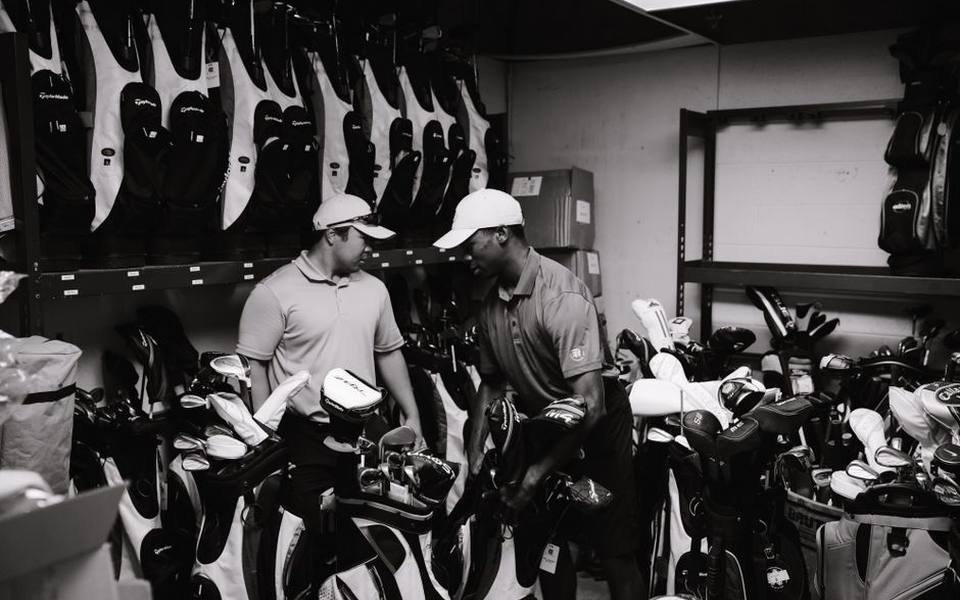
Before investing in multiple replacement shafts, scheduling a professional custom club fitting session ensures you choose the ideal weight, launch profile, and stiffness for your swing speed. Many players also utilize an on-site club repair bench to address single broken clubs or adjust loft and lie angles, maintaining dependable performance across their entire bag.
Published 2026-09-21 · reviewed with each rebuild, last September 2026.
Find driving ranges near you
The directory lists 3,693 driving ranges by state and city — pick your state or use the “Near me” button in the header.
More guides
-
 Buying
Realistic Costs and Equipment Needed for a Home Golf Simulator
-
 Service
Golf Club Maintenance: Regripping and Reshafting Guide
-
 Money
MoneyGolf Lessons Cost and Beginner Guide: What to Expect and How to Budget
-
 Buying
Golf Club Fitting Cost and Selection Guide
-
 Buying
A Practical Guide to Buying, Selling, and Trading In Used Golf Clubs
-
 Money
MoneyDriving Range Costs, Practice Routines, and Range Etiquette
-
 Service
Fixing Topped Shots and Improving Ball Striking on the Range
-
 Buying
Best Golf Launch Monitors Buying Guide: Space, Tech, and Budget
-
 Buying
The Complete Guide to Buying Used Golf Clubs and Pre-Owned Equipment
-
 Buying
How to Choose the Best Local Golf Shop and Pro Shop Services
-
 Owning
Miniature Golf and Putt-Putt Guide: Rules, Courses, and Family Fun
-
 Service
Complete Guide to Custom Golf Fitting and Shaft Selection
-
 Buying
Complete Guide to Buying and Maintaining Golf Shoes and Cleats
-
 Owning
Designing and Installing Indoor and Backyard Putting Greens
-
 Service
Golf Swing Analytics, Speed Training, and Shot Tracking Systems
-
 Buying
Golf Practice Nets, Driving Mats, and Backyard Hitting Setups
-
 Buying
How to Buy Used Golf Clubs and Get the Best Demo Day Deals
-
 Owning
Custom Golf Gear Personalization: Stampers, Bags, and Embroidery
-
 Buying
Selecting and Setting Up Home Golf Simulators and Launch Monitors
-
 Service
Choosing Golf Academies, Lessons, and Coaching Programs
-
 Buying
Custom Golf Club Fitting: Shafts, Clubheads, and Specifications
-
 Service
Entertainment Driving Ranges: Planning Group Outings, Corporate Events, and Bachelor Parties
-
 Service
Mini Golf, Footgolf, and Indoor Golf: Complete Venue Guide and Directory
-
 Buying
Golf Equipment and Club Fitting Guide: Starter Sets, Drivers, and Custom Builds
-
 Buying
Finding the Right Golf Pro Shop and Equipment Retailer
-
 Owning
Designing and Hosting Mini Golf Events: Indoor Party Venues and Practice Games
-
 Buying
Indoor Golf Practice and Launch Monitors: How to Build Your Studio
-
 Buying
Golf Laser Rangefinders Buyer's Guide: Features, Accuracy, and Value
-
 Owning
Golf Club Groove Maintenance: Tools, Techniques, and Equipment Care
-
 Buying
Commercial Golf Green Mowers: Maintenance, Selection, and Buying Guide
-
 Owning
Best Mobile Golf Simulators and Games for Practice and Play
-
 Owning
Fixing Heavy Contact, Managing Distance, and Choosing Cold-Weather Gear
-
 Buying
Club Car Golf Carts: The Practical Guide to Buying, Inspecting, and Customizing
-
 Owning
Complete Guide to Putt-Putt Games: History, Titles, Platforms, and Walkthroughs
-
 Service
Top Sports Bars and Lounges: How to Pick the Best Game-Day Spots in NYC and Florida
-
 Safety
24-Hour Gun and Shooting Ranges: Availability, Rules, and Finding Round-the-Clock Facilities
-
 Owning
Golf Green Mobile Estates: Guide to Golf Community Living and Amenities