Root Causes Behind Topped Shots
Golfers top the golf ball when the leading edge or sole of the club strikes above the ball's equator rather than contacting the back of the ball before grazing the turf. This issue almost always stems from the lowest point of the swing arc occurring behind the ball or rising prematurely through the hitting zone. Trying to scoop the ball into the air by leaning back onto the trailing foot raises the arc, resulting in thin strikes or weak ground balls that roll only a few dozen yards.
Weight distribution plays an outsized role in why players repeatedly skull or top their shots. In a clean strike, around seventy percent of the golfer's body weight shifts toward the lead side at impact. When players hang back on their trail leg, the club bottoms out early in empty space and catches the ball on its upswing. Keeping the head steady rather than sliding or lifting out of posture ensures that the bottom of the swing arc aligns naturally two to three inches ahead of the target line.
Ball position mistakes also guarantee topped strikes even when the mechanics look reasonable. If an iron is placed too far forward in the stance, the club reaches its low point and begins ascending before it ever makes contact with the golf ball. Finding consistent baseline contact requires auditing your setup on open mats or grass bays at local golf driving ranges and practice facilities, where alignment sticks can verify ball placement relative to the lead heel.
Clean Iron Striking and Ground Contact Points
Solid iron striking requires hitting the back center of the ball first and driving the clubhead down into the turf to create a divot in front of the lie. Many high-handicap golfers mistakenly attempt to sweep irons off the turf like fairway woods, fearing that hitting the ground will hurt their wrists or slow down the club. In reality, modern irons are designed with bounce and camber specifically to slide through topsoil without getting stuck, provided the ball is struck first.
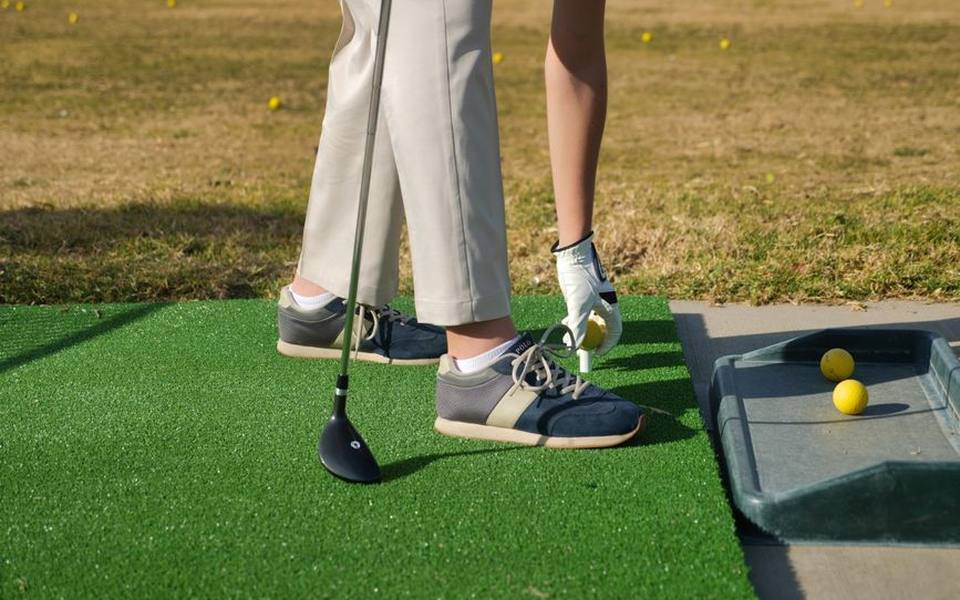
To visualize where to hit the golf ball with irons, imagine striking the front half of the ball facing the target. Focusing your eyes on the dimple facing the green naturally promotes a downward angle of attack and encourages your hands to lead the clubhead into impact. This shaft lean compresses the ball against the clubface grooves, delivering higher ball speed, optimal backspin, and consistent flight trajectories across mid and short irons.
A dependable training drill involves placing a small coin or an alignment tee in the turf two inches ahead of the ball. Your singular mechanical goal during the downswing is to collect the ball cleanly and disturb the marker ahead of it. Practicing this feel trains your lower body to rotate properly and shifts your swing's low point forward, virtually eliminating thin and bladed misses from fairway lies.
Eliminating Early Extension in the Downswing
Early extension occurs when a golfer's hips thrust forward toward the ball line during the transition and downswing, causing the spine to straighten up prematurely. When the pelvis moves closer to the ball, the arms run out of clearance space to swing naturally through impact. To avoid digging into the turf, the player instinctively flips their wrists or pulls their chest upward, pulling the clubface off the ball's center and topping the shot.
Correcting this breakdown begins with maintaining the hip hinge established at address. During the backswing, the trail hip rotates deep behind the golfer; during the transition, the lead hip must rotate back and clear out, rather than pushing the belt buckle toward the target line. Practicing with an alignment rod stuck in the ground or a golf bag brushing against your tailbone provides immediate physical feedback if your glutes pull away before contact.
Hip mobility and core stability dictate how easily a player can hold posture through dynamic rotation. Golfers who struggle with tight hip flexors often stand up out of posture because rotating with bent knees feels physically taxing. Incorporating simple rotational stretches during warm-ups helps reinforce the ability to stay in your posture until after the ball is well airborne.
Establishing Proper Grip Pressure and Hand Placement
How a player holds the golf club sets the foundation for clubface control, wrist hinge, and release timing. A grip trainer is a molded training aid featuring pre-formed finger contours that forces your hands into a textbook neutral grip. Learning how to use a grip trainer involves sliding your lead hand into the molded grooves so the club rests diagonally across the fingers rather than flat in the palm, followed by matching your trail hand securely over the thumb.
Tension is another quiet culprit behind topped shots and erratic ball striking. Gripping the handle too tightly locks the forearms and wrists, preventing the natural hinge at the top of the swing and forcing an awkward, rigid lunge at the ball. The handle should be held with light to moderate pressure—firm enough to control the clubhead through impact, but relaxed enough for the wrists to hinge and release smoothly.
Over time, rubber grips lose their tackiness from sweat, dirt, and exposure to heat, leading players to squeeze tighter simply to keep the club from twisting. Utilizing professional golf club regripping while you wait can restore a confident, light hold without spending heavily on new hardware, ensuring hand mechanics remain fluid through the entire motion.
Systematic Methods to Elevate Swing Consistency
Improving a golf swing is rarely about overhauling your entire movement in a single afternoon; it requires diagnosing the primary mechanical fault and executing targeted repetitions. Golfers often spend hours on the range hitting balls with driver at full speed without a plan, merely ingraining bad habits. A structured session focuses on one specific variable—such as takeaway path, shoulder turn depth, or hip rotation—using half-speed swings to build reliable muscle memory.
Transitioning from fragmented technical thoughts to athletic motion requires external targets and feedback gates. Setting up tees on either side of the ball tests clubhead path, while tracking divot patterns reveals whether swing path tendencies skew excessively from the outside or inside. If self-guided practice plateaus, working with certified instructors through driving ranges with golf lessons provides an objective eye to untangle intertwined faults that are difficult to feel on your own.
Consistency also hinges on tempo and balanced finishes. A hurried transition at the top often disconnects the arms from torso rotation, ruining contact quality before the club even nears impact. Strive to hold your finish position until the ball lands on every practice shot, which naturally regulates rhythm and ensures body weight finishes entirely balanced over the lead leg.
Video Review and Modern Swing Analysis Solutions
Human perception during a full golf swing is notoriously deceptive; what feels like an on-plane motion often looks completely different on high-speed video. Effective swing analysis relies on capturing footage from two standard angles: down-the-line (aligned parallel to your foot line through your hands) and face-on (perpendicular to your chest). Modern mobile analysis apps make it easy to draw reference lines tracking head movement, spine angle, and club path across the swing.
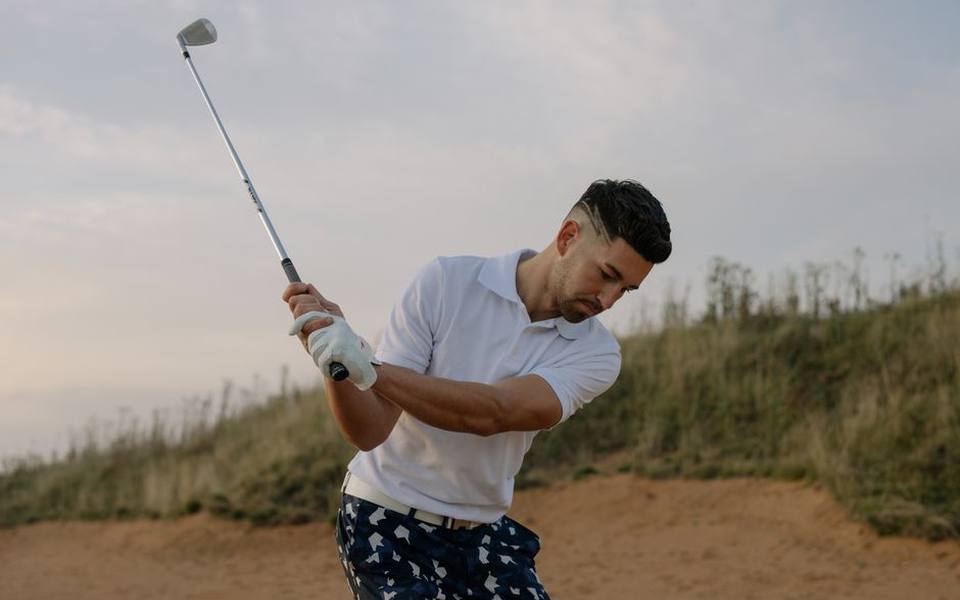
Evaluating video analysis tools depends on video capture framerates, side-by-side comparison capabilities, and automated line-drawing overlays. Top-tier tools offer high-framerate playback without motion blur and allow you to compare your setup directly against tour professionals or past personal baselines. Analyzing these checkpoints highlights swing plane deviations, excessive head dip, or early wrist unhinging without needing cumbersome equipment.
Golfers practicing during winter or bad weather can take their video work into dedicated indoor golf and simulator bays. High-speed overhead cameras in these facilities capture clubface orientation at impact down to the millisecond, pairing visual feedback with precise launch angles to explain exactly why a shot sailed low, topped, or pushed off target.
Measuring Club Speed and Striking Efficiency
Swinging faster only translates to longer, straighter shots when accompanied by centered face contact. Clubhead speed represents the velocity of the clubhead immediately before impact, while ball speed measures how quickly the ball leaves the face. Golfers measure their swing speed using compact portable radar units, optical sensor mats, or integrated launch monitors that calculate smash factor—the ratio of ball speed divided by swing speed.
Smash factor provides the clearest benchmark of striking efficiency. A player swinging an iron at eighty miles per hour with a smash factor of 1.35 will consistently outdrive a playing partner swinging at ninety miles per hour who repeatedly catches the ball thin or off the toe. Practicing on ranges with ball-tracking technology allows you to monitor smash factor and carry distance shot by shot, proving that pure contact yields better results than wild exertion.
If speed increases but carry distance drops, the culprit is almost always off-center contact or abnormal spin rates caused by poor delivery angles. Dialing back exertion to an eighty-percent effort level typically tightens contact patterns, reduces topped and thin misses, and frequently produces higher real-world ball speeds by maximizing energy transfer through the center of the face.
Sharpening Short Game Contact and Chipping Control
Topped and bladed chips around the putting surface can ruin an otherwise solid hole in seconds. The mechanics behind bladed wedge shots mirror full swing flaws: attempting to help the ball airborne by flicking the trailing wrist at impact. When the wrist collapses, the leading edge rises prematurely, striking the ball across its center and sending it skittering across the green into trouble on the opposite side.
Reliable chipping demands an intentional setup tailored for crisp turf interaction. Position your feet narrow and slightly open to the target line, with sixty to seventy percent of your weight settled forward on your lead leg. The ball should sit slightly back of center in your stance, with your hands leaning ahead of the ball. Maintaining this forward press throughout the stroke ensures a shallow downward angle of attack that lets the club's bounce do the work.
Keep the stroke quiet and driven by torso rocking rather than hands and wrists. Think of chipping as an extended putting stroke where the triangle formed by your shoulders, arms, and club handle moves as a single unit. Practicing low running chip-and-run shots with an eight-iron alongside standard wedge shots develops touch and gives you high-percentage options from tricky fringes.
Better Putting Fundamentals and AimPoint Green Reading
Putting accounts for roughly forty percent of all strokes in an average round, making green reading and stroke consistency essential for shooting lower scores. Improving your putting starts with standardizing your setup: eyes positioned directly over or slightly inside the ball, a balanced athletic stance, and a smooth pendulum stroke driven by the upper chest. Accelerating smoothly through impact prevents decelerating jabs that throw the ball off the intended start line.
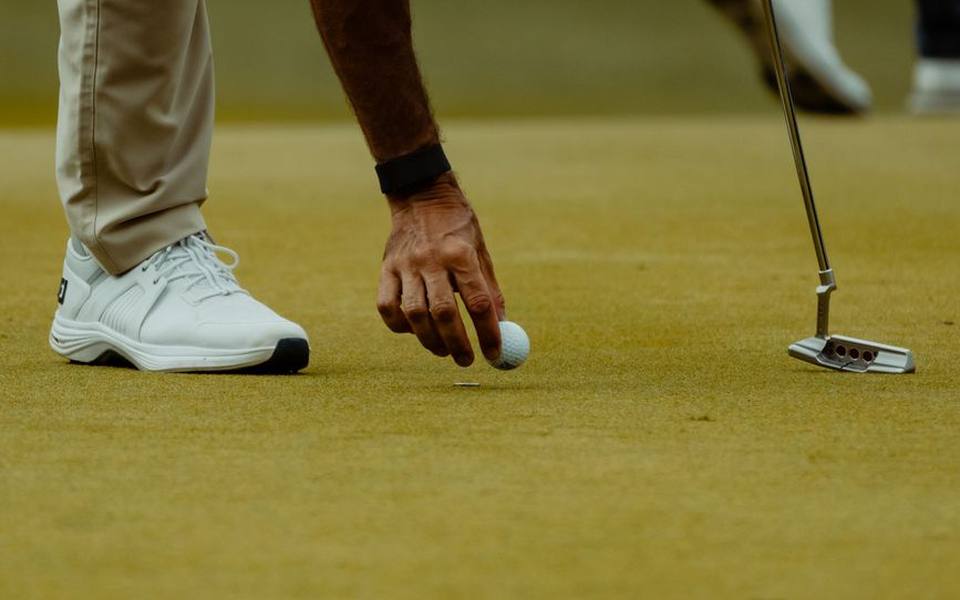
AimPoint putting is a structured green-reading methodology that relies on physical sensation rather than visual estimation to gauge slope. Because optical illusions caused by trees, mountains, and fairway angles frequently deceive human eyes, this system teaches golfers to feel the slope percentage beneath their feet while straddling the putting line. Golfers assign a numerical grade to the grade of tilt, typically between one and four percent.
Once the slope value is determined, the golfer extends their fingers at arm's length to calibrate the exact break distance outside the cup relative to their distance from the hole. This eliminates subjective guessing and instills absolute trust in alignment. Combining reliable slope assessment with steady stroke tempo helps eliminate three-putts and dramatically improves scoring across varied green conditions.
Structuring Practice Sessions for On-Course Results
The greatest challenge golfers face is translating clean ball striking on the driving range into reliable performance on the first tee. Rapid-fire bucket hitting creates false confidence because hitting ten consecutive seven-irons allows your body to auto-correct errors without consequence. On the course, every swing is a cold strike requiring distinct club selection, posture, and alignment adjustments.
Structure your range sessions using randomized practice routines that replicate real golf scenarios. Switch clubs on every swing, step off the mat to reset your pre-shot routine, and select specific visual targets on the range rather than spraying balls into an open field. Introduce consequence-driven games, such as requiring three consecutive solid iron strikes before advancing to your fairway woods or wedges.
Dedicate the final twenty percent of your bucket to simulated holes. Picture the opening fairway of your home course, visualize the hazards, and hit your tee shot, followed by an approach iron based on where your ball would have landed. This mental engagement bridges the gap between mechanical driving range drills and pressure-filled on-course execution.
Published 2026-09-20 · reviewed with each rebuild, last September 2026.
Find driving ranges near you
The directory lists 3,693 driving ranges by state and city — pick your state or use the “Near me” button in the header.
More guides
-
 Buying
Realistic Costs and Equipment Needed for a Home Golf Simulator
-
 Service
Golf Club Maintenance: Regripping and Reshafting Guide
-
 Money
MoneyGolf Lessons Cost and Beginner Guide: What to Expect and How to Budget
-
 Buying
Golf Club Fitting Cost and Selection Guide
-
 Buying
A Practical Guide to Buying, Selling, and Trading In Used Golf Clubs
-
 Money
MoneyDriving Range Costs, Practice Routines, and Range Etiquette
-
 Buying
Best Golf Launch Monitors Buying Guide: Space, Tech, and Budget
-
 Buying
The Complete Guide to Buying Used Golf Clubs and Pre-Owned Equipment
-
 Buying
How to Choose the Best Local Golf Shop and Pro Shop Services
-
 Owning
Miniature Golf and Putt-Putt Guide: Rules, Courses, and Family Fun
-
 Service
Complete Guide to Custom Golf Fitting and Shaft Selection
-
 Buying
Complete Guide to Buying and Maintaining Golf Shoes and Cleats
-
 Owning
Designing and Installing Indoor and Backyard Putting Greens
-
 Service
Golf Swing Analytics, Speed Training, and Shot Tracking Systems
-
 Buying
Golf Practice Nets, Driving Mats, and Backyard Hitting Setups
-
 Buying
How to Buy Used Golf Clubs and Get the Best Demo Day Deals
-
 Owning
Custom Golf Gear Personalization: Stampers, Bags, and Embroidery
-
 Buying
Selecting and Setting Up Home Golf Simulators and Launch Monitors
-
 Service
Choosing Golf Academies, Lessons, and Coaching Programs
-
 Buying
Custom Golf Club Fitting: Shafts, Clubheads, and Specifications
-
 Service
Entertainment Driving Ranges: Planning Group Outings, Corporate Events, and Bachelor Parties
-
 Service
Mini Golf, Footgolf, and Indoor Golf: Complete Venue Guide and Directory
-
 Owning
Tournaments, Scoring Tech, and Gear Upkeep: The Modern Golfer's Guide
-
 Buying
Golf Equipment and Club Fitting Guide: Starter Sets, Drivers, and Custom Builds
-
 Buying
Finding the Right Golf Pro Shop and Equipment Retailer
-
 Owning
Designing and Hosting Mini Golf Events: Indoor Party Venues and Practice Games
-
 Buying
Indoor Golf Practice and Launch Monitors: How to Build Your Studio
-
 Buying
Golf Laser Rangefinders Buyer's Guide: Features, Accuracy, and Value
-
 Owning
Golf Club Groove Maintenance: Tools, Techniques, and Equipment Care
-
 Buying
Commercial Golf Green Mowers: Maintenance, Selection, and Buying Guide
-
 Owning
Best Mobile Golf Simulators and Games for Practice and Play
-
 Owning
Fixing Heavy Contact, Managing Distance, and Choosing Cold-Weather Gear
-
 Buying
Club Car Golf Carts: The Practical Guide to Buying, Inspecting, and Customizing
-
 Owning
Complete Guide to Putt-Putt Games: History, Titles, Platforms, and Walkthroughs
-
 Service
Top Sports Bars and Lounges: How to Pick the Best Game-Day Spots in NYC and Florida
-
 Safety
24-Hour Gun and Shooting Ranges: Availability, Rules, and Finding Round-the-Clock Facilities
-
 Owning
Golf Green Mobile Estates: Guide to Golf Community Living and Amenities